Syria, Lebanon, Jordan & Turkey
This section includes our trips to the Near East but with a particular focus on Syria as the country that was more impressive in the region.
The conflict in Syria since 2011 is doubly tragic. Not only has it resulted in the death or emigration of millions of Syrians but it has destroyed or damaged many of the ancient monuments. The friendly people and extraordinary ancient sites made it one of the most interesting places that we have ever visited.
I first visited on business in 1986 and we then visited Syria and Lebanon five times between 1999 and 2003 while resident in the Middle East. We travelled each time on local buses and visited Beirut, Damascus, Hama, Tripoli and Aleppo as well as many of the ancient sites.
Syria and Lebanon can claim to having one of the oldest civilizations in the world and has remains of the Phoenician, Akkadian, Aramaean, Greek, Palmyrene, Nabataean, Roman, Crusader and Ottoman cultures that have occupied it for many thousands of years.
Before the war, the country had an extraordinary mix of ethnicities and religions who lived together in relative harmony. People were free to practice whatever religion they liked provided they did not threaten the power of the Assad Government which, while repressive, was at least secular. The Assads are from the Alawite minority that are a sect of Shia Islam. While most people were Sunni Muslim, 10% of the population were Christian (of many different sects) and there were often churches close by mosques. The Christian minority were authorised to make and sell alcohol so there were good wines made in the north.
Despite the abundance of well-preserved ancient sites, there were very few tourists but local people everywhere were friendly, helpful and hospitable. Some of the ancient houses in Damascus and Aleppo had been converted into boutique hotels and there were many excellent restaurants.
This all changed post 2011 in what became a proxy war between Sunni Muslim groups including ISIS (backed by Saudi Arabia and UAE), Shiite groups (backed by Iran), the Assad Government (backed by Russia) and other groups (backed by the USA and other Western countries). Turkey has also taken the opportunity to attack the Kurds in Syria and Israel adds to the mayhem by attacking targets in the south. The war has caused massive disruption with an estimated 6 million Syrians now refugees overseas and a further 7 million internally displaced out of a population of ca. 20 million at the start of the war. The minority Christian and Islamic sects were caught in the middle and many are likely to have had no real option other than to emigrate.
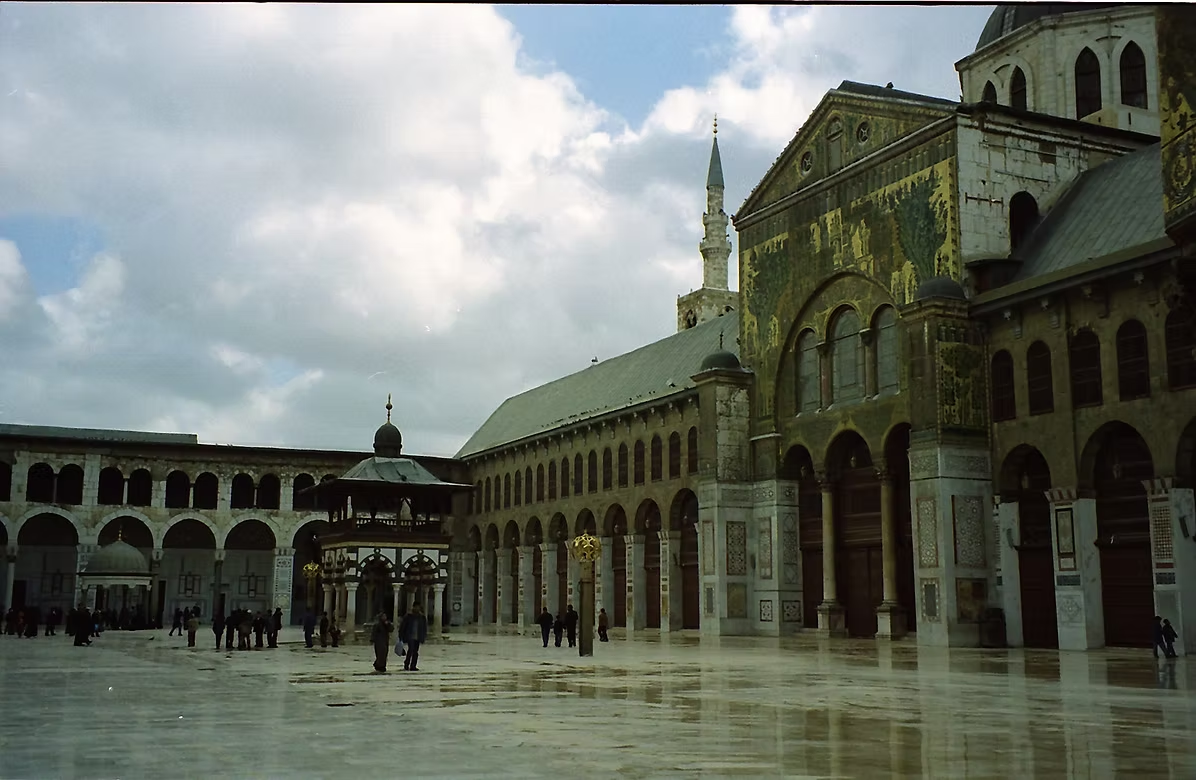
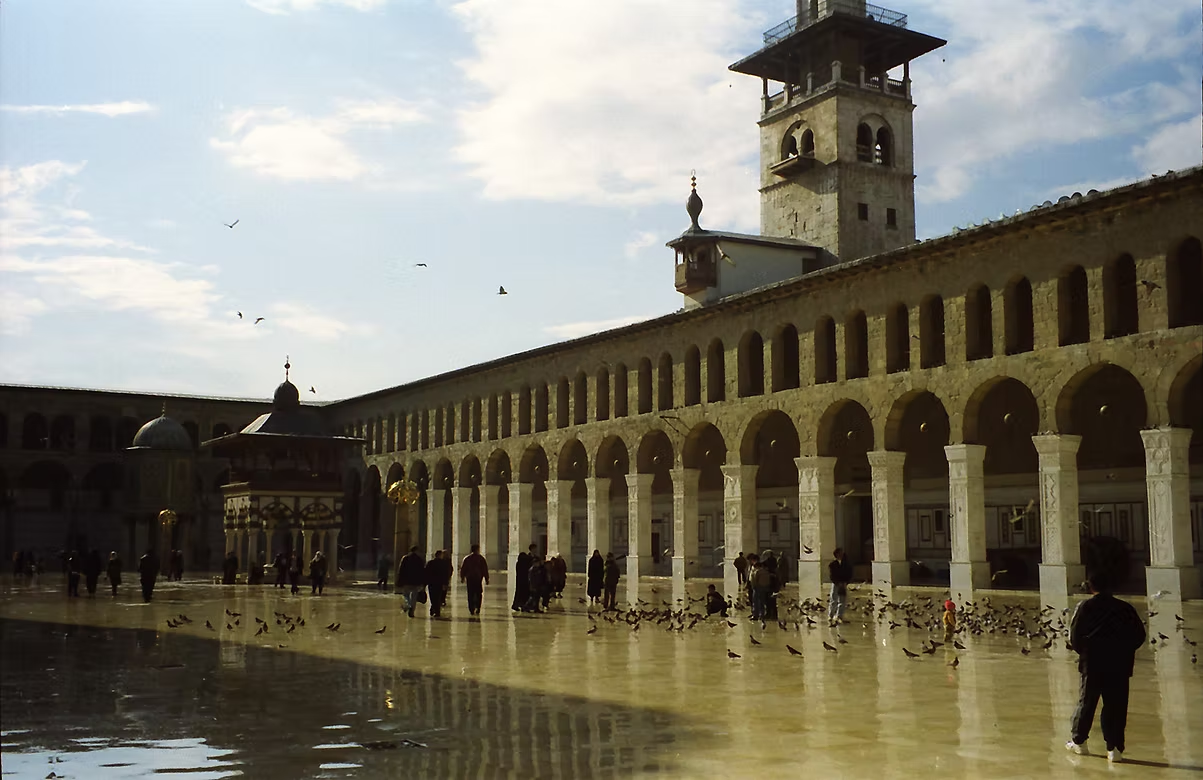
The Ummayed Mosque in Aleppo is one of the holiest places in Islam and has been in continuous use since it was built in AD 715 on the site of a Roman temple. The mosque is huge and superbly decorated and is surrounded by the ancient souk (or market) that is the heart of the old city of Damascus. Throughout the old city are ancient mosques and madrassas as well as many ornately decorated houses and palaces that were built during the Ottoman period. Aleppo also had a magnificent 10th Century mosque at the heart of an old city with ancient buildings and decorated houses.
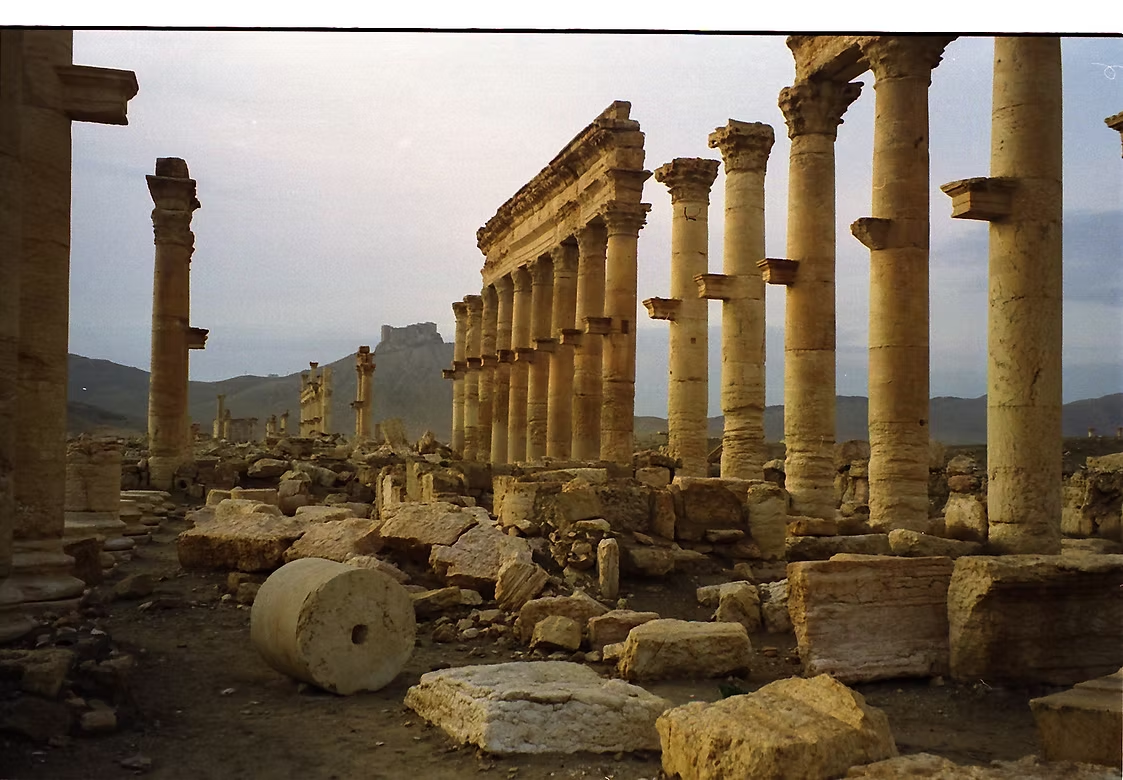
The ancient sites that cover every part of Syria and Lebanon include the city of Palmyra, the Roman cities of Apamea, Baalbeck and Bosra, many Crusader castles (including the incomparable Krak des Chevaliers), the Phoenician city of Byblos and early Byzantine Christian sites like the Basilica of St Simeon Stylites and the Dead Cities.
Some of the places that we visited like the Grand Mosque in Aleppo and parts of Palmyra are known to have been destroyed and others are likely to have been damaged by fighting and/or looting. There so many extraordinary things in Syria, that there will still be good reason to visit when that become possible again. It will be a huge task to rebuild the things that have been lost or damaged. Syria will have lost much of its educated and skilled population to emigration and the culture will be poorer for having lost many of its ethnic minorities.










Damascus
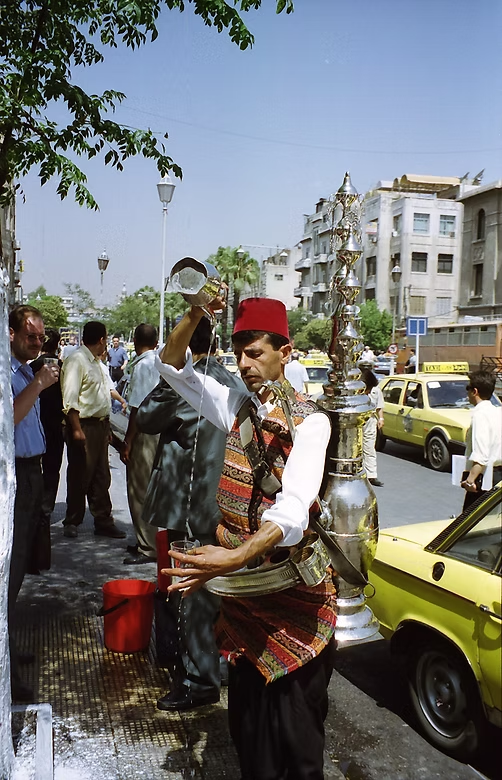
The capital of Syria is more than 5,000 years old and built on settlements dating back to 10,000BC. Like Aleppo and Byblos, it one of the oldest continuously inhabited cities in the world.
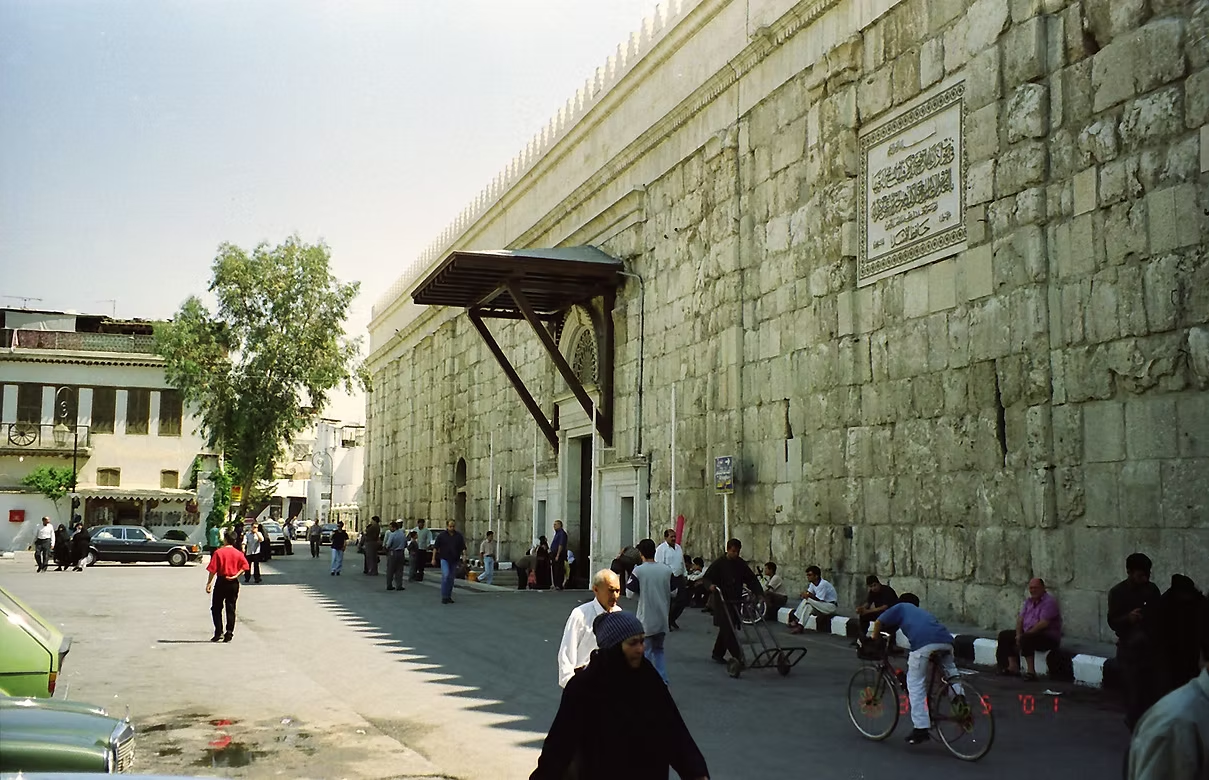
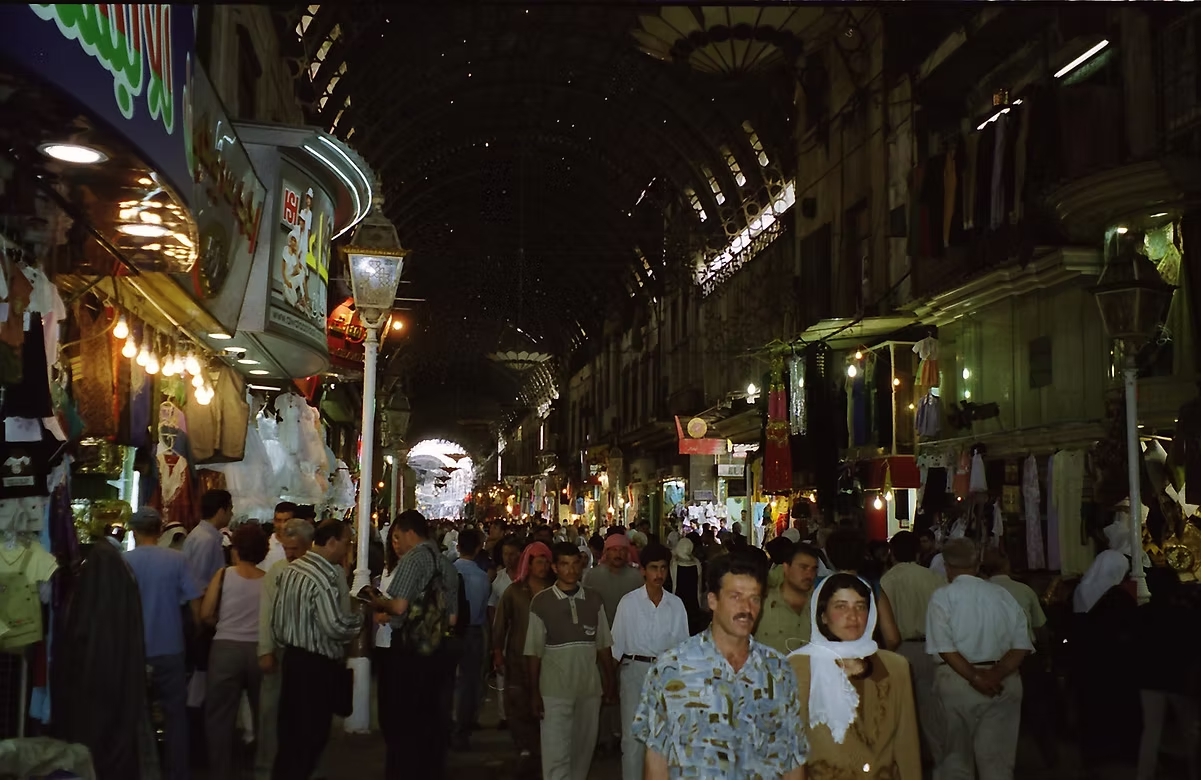
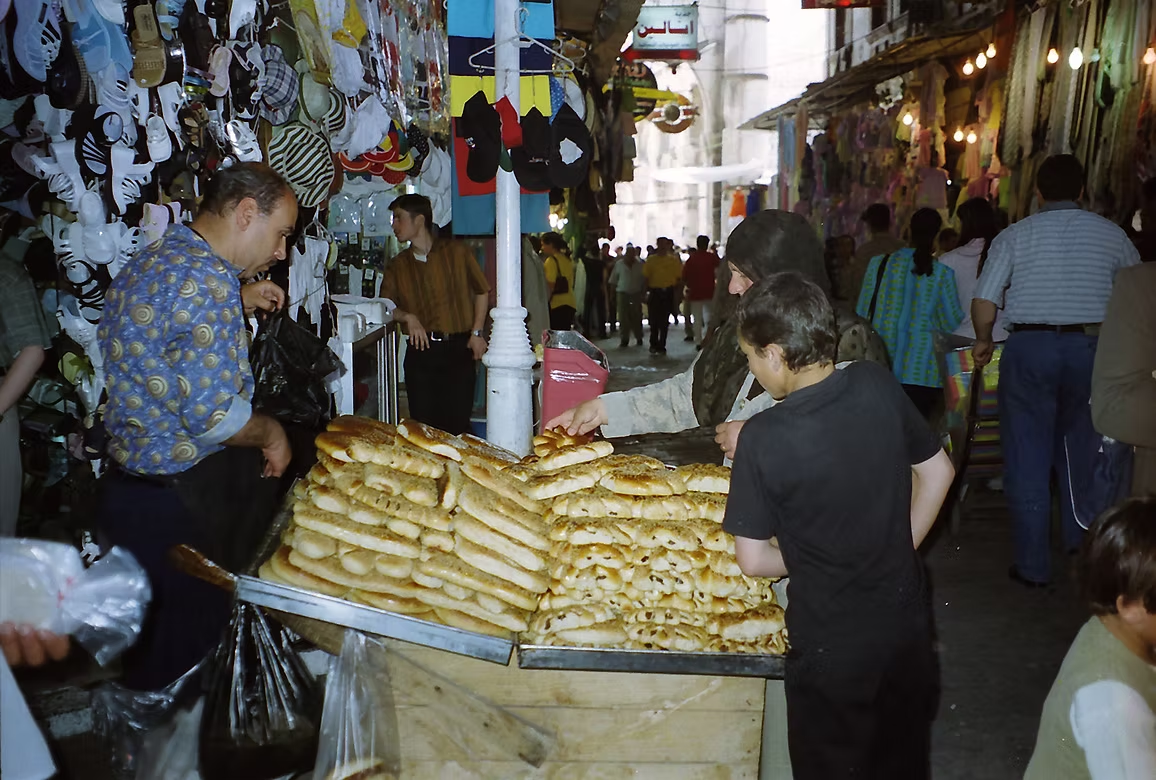
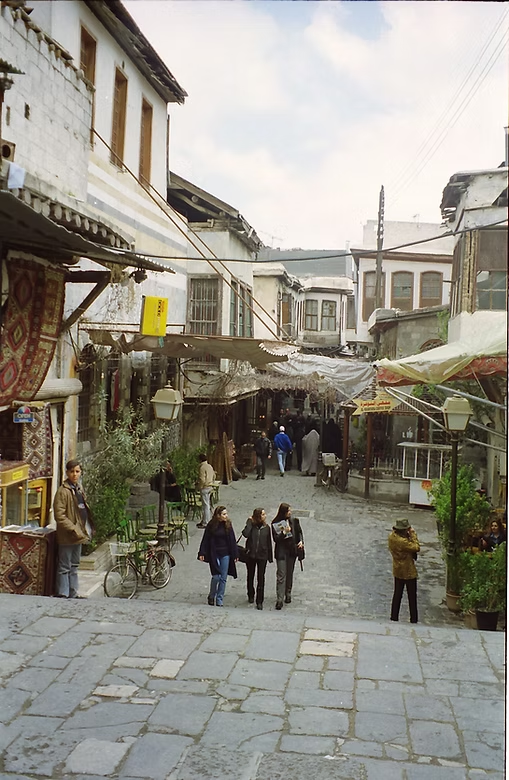
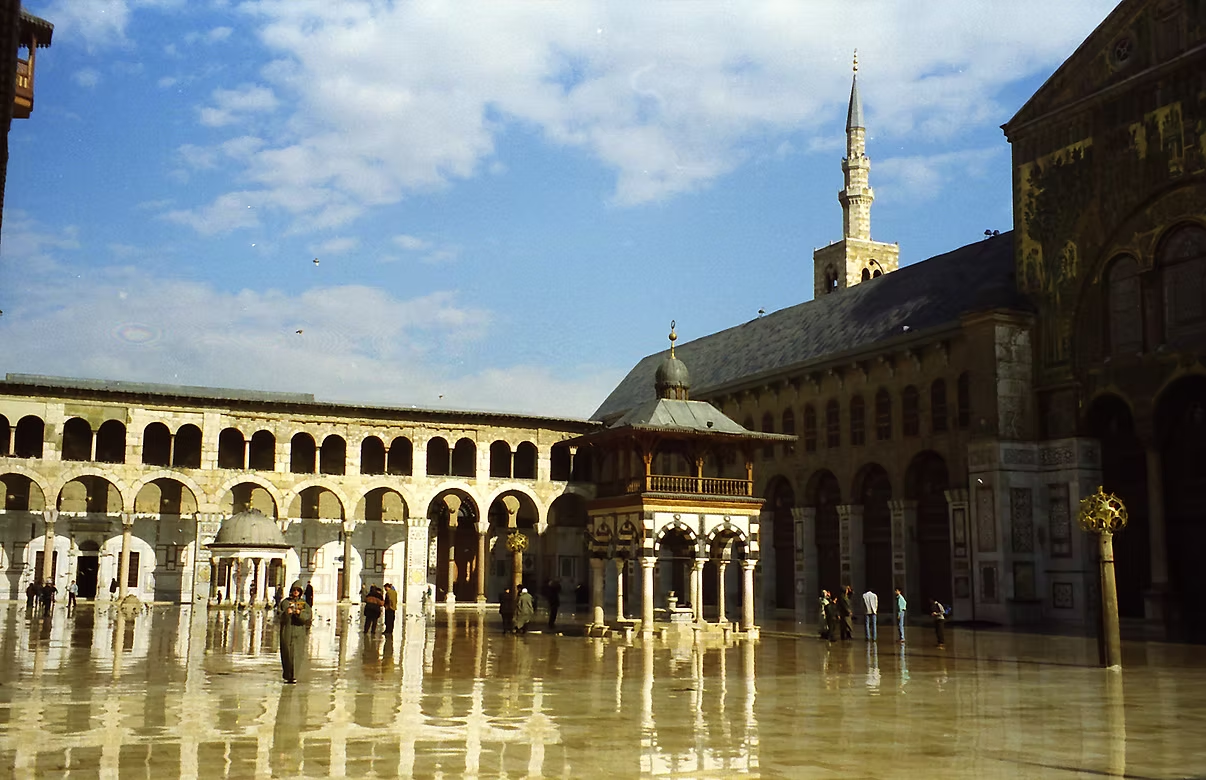
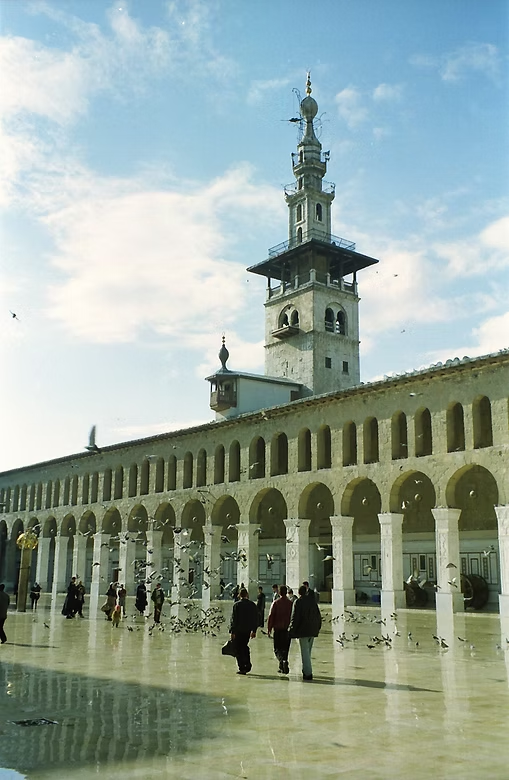
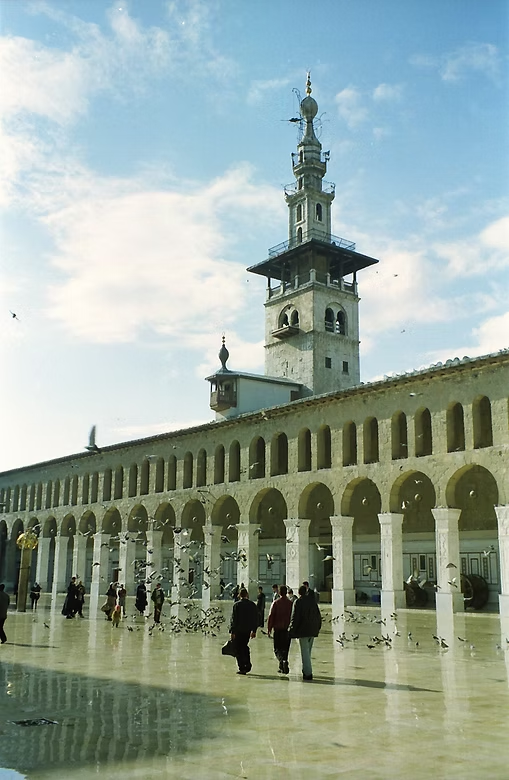
It was the capital of the Umayed Caliphate from 660 to 750 AD. The magnificent mosque built at the center of the old city was completed in 715 AD and had been in continuous use ever since. It is still one of the largest and holiest mosques in the Islamic world and was built on the site of a Christian basilica which in turn was build on the site of a Roman Temple of Jupiter and, before that, an Assyrian sanctuary. The Umayed Mosque is at the center of the Damascus Souk and so it surrounded by ancient Khans (fortified merchant’s houses and stores) as well as many hundreds of small shops and coffee houses.
Damascus became prominent as a result of its being the focus of the ancient trade routes between Europe, China and India. In the Middle Ages, Damascene swords were the finest available and famed for the quality of the steel that was used.
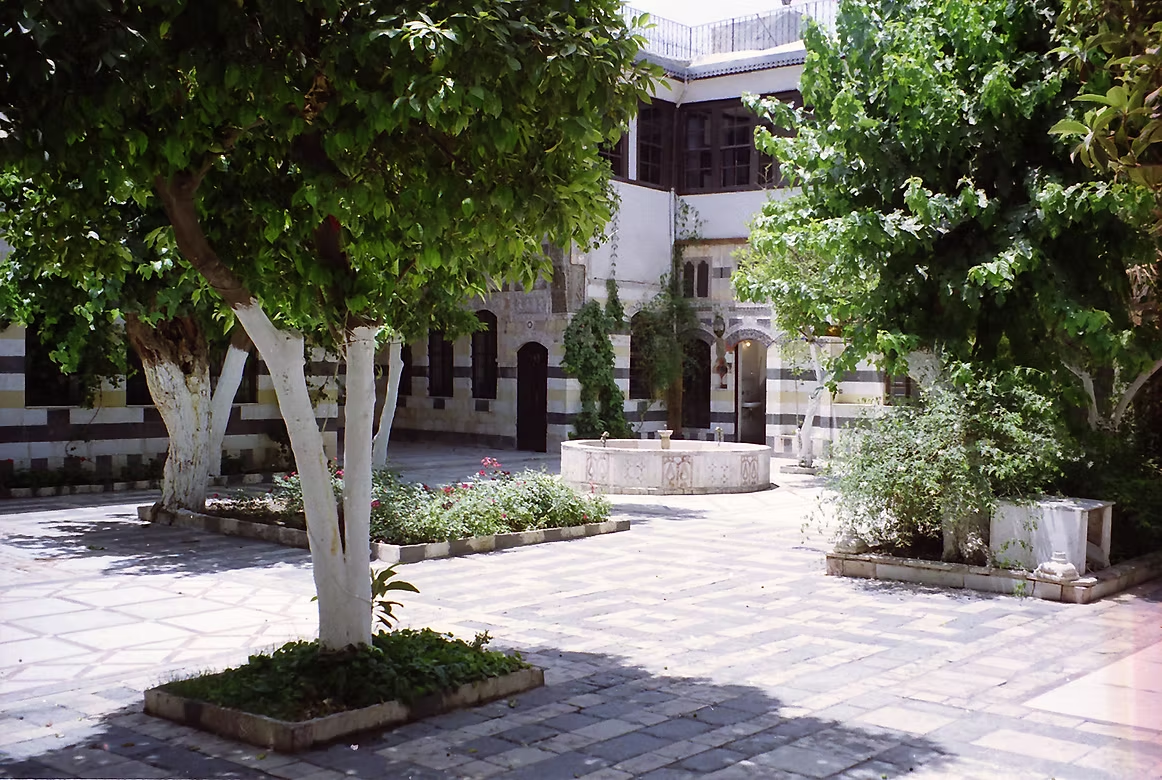
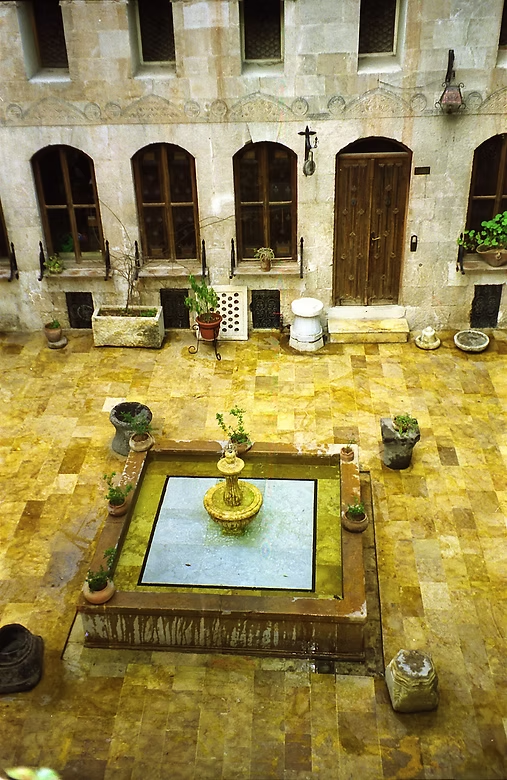
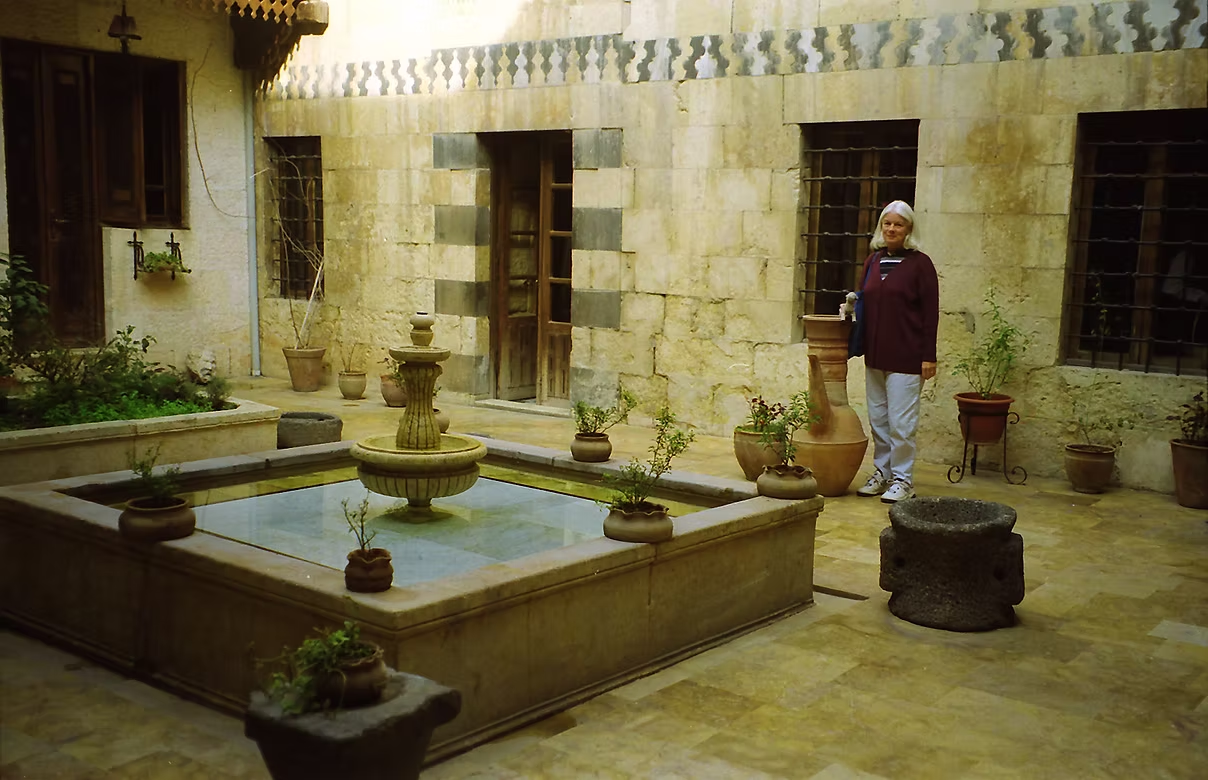
Damascus was the provincial capital during the Ottoman period and the Old City has many palaces and houses dating from around 1700. These beautiful buildings are surrounded by plain high walls but the interiors are built around courtyards with gardens and fountains that are ornately decorated with carved wooden panels, glass and mirrors. There are also hundreds of ancient mosques and madrassas throughout the city.
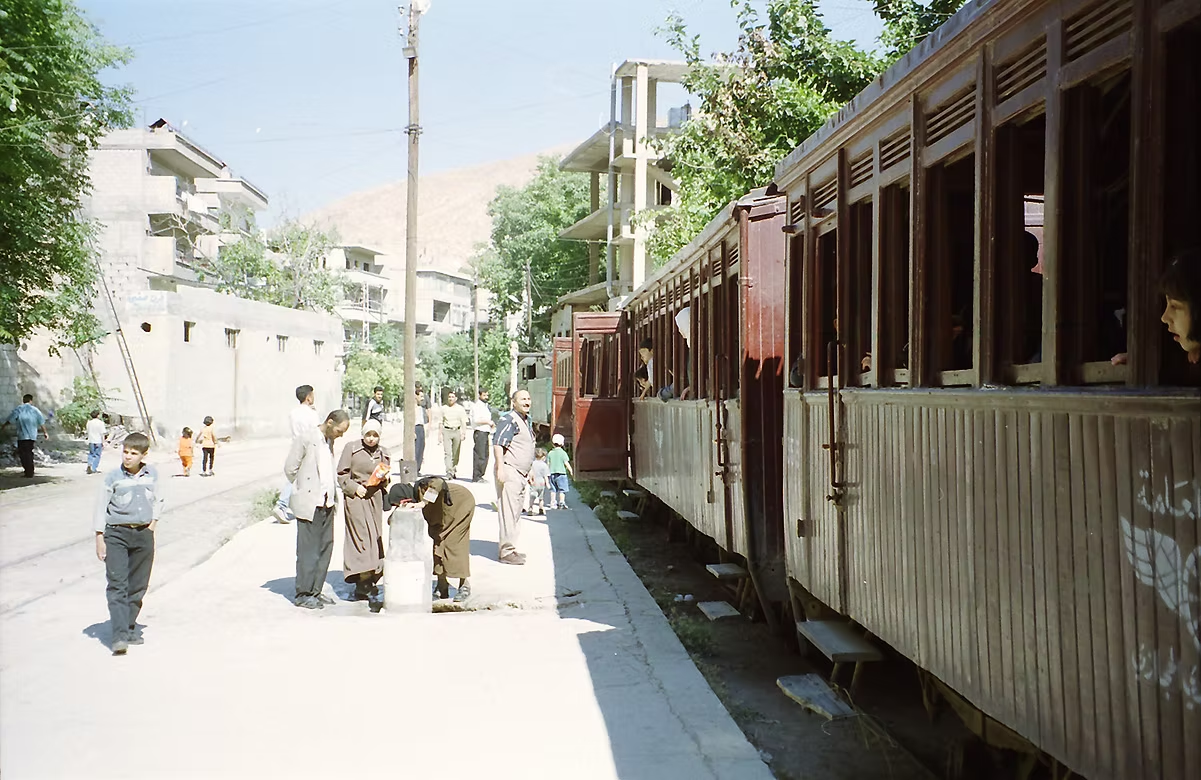
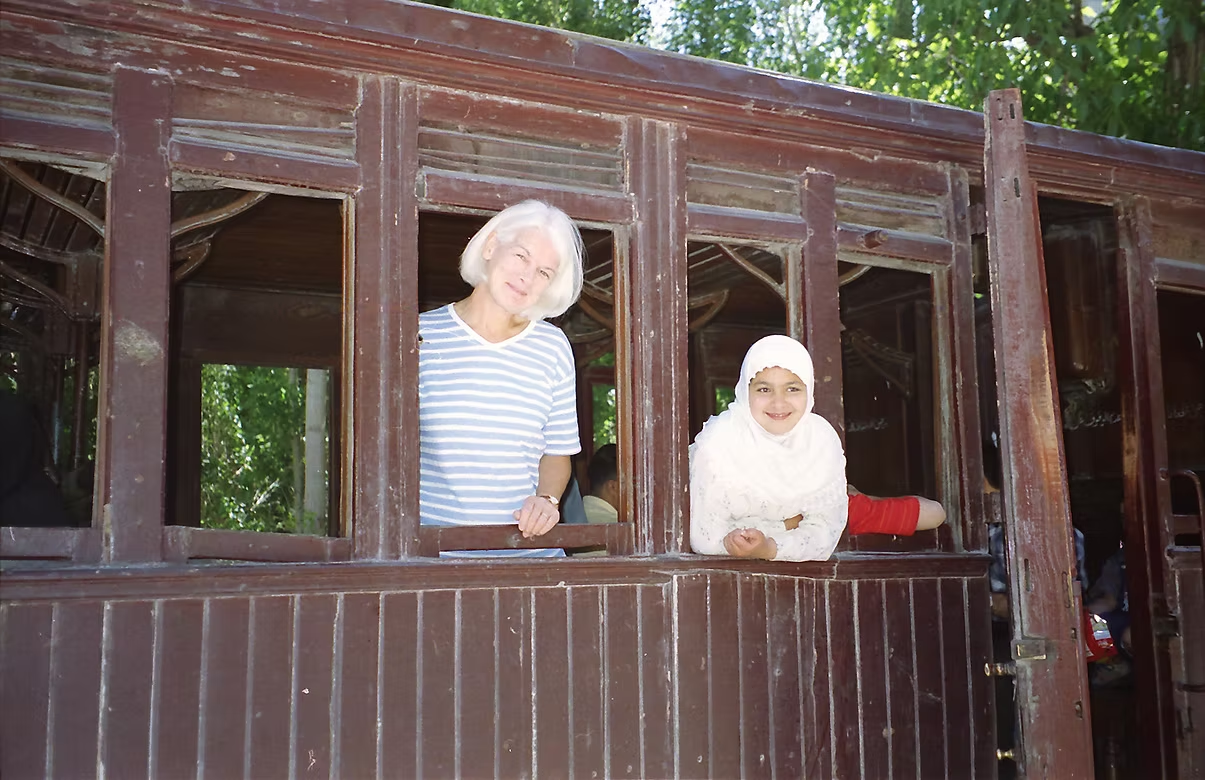
The Ottomans built the Hejaz Railway to Medina that has never operated over the complete route to this day. But the Hejaz Station was open when we last visited and we took the weekly excursion steam train into the Lebanon Range to the town of Zabadani. It was filled with Syrian families and it took all day passing down the main streets of villages and then grinding it’s way slowly into the mountains. On the return journey, the entertainment was train passengers and villagers ambushing each other with buckets of water thrown through open windows.
After WW1 and the defeat of the Ottoman Empire, France gained control of Syria and Lebanon under a mandate from the League of Nations and they remained under French control until 1943. This period of colonial occupation left it’s own mark with distinctively French styles in buildings from this period.
Unlike much of the rest of Syria’s heritage, the old city of Damascus is believed to have largely survived the destruction caused by the Civil War.











Aleppo
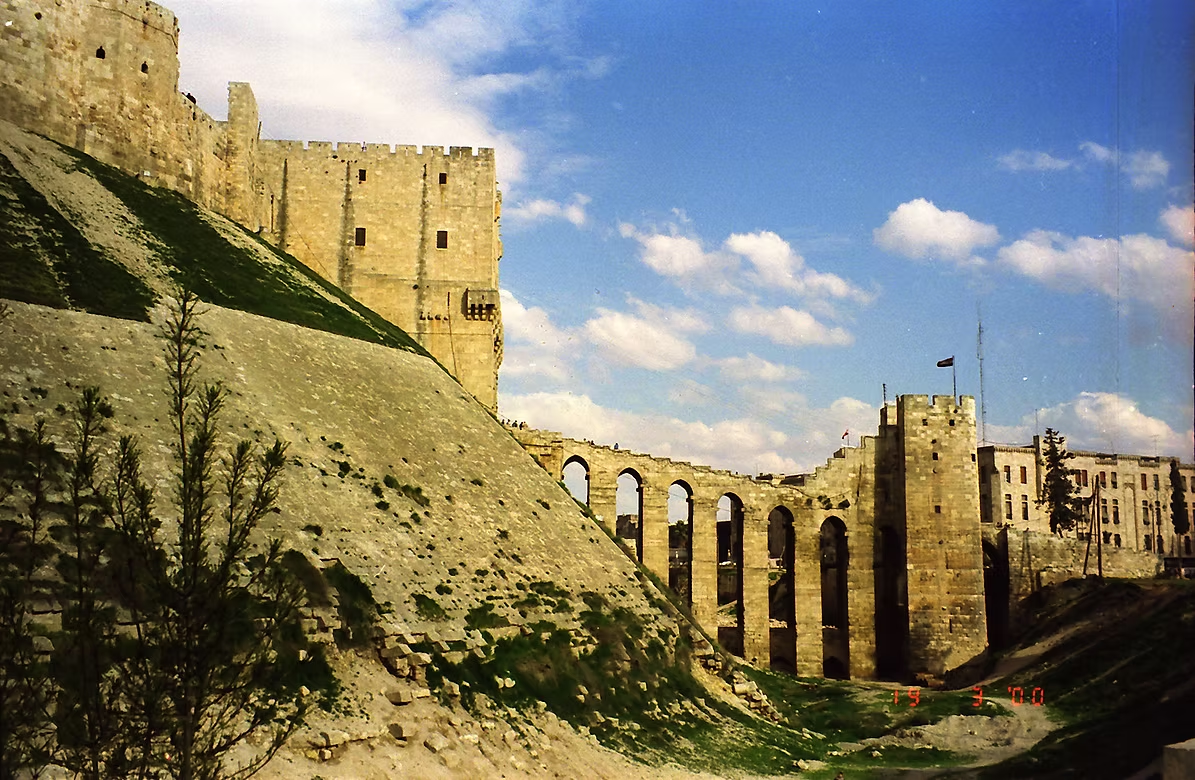
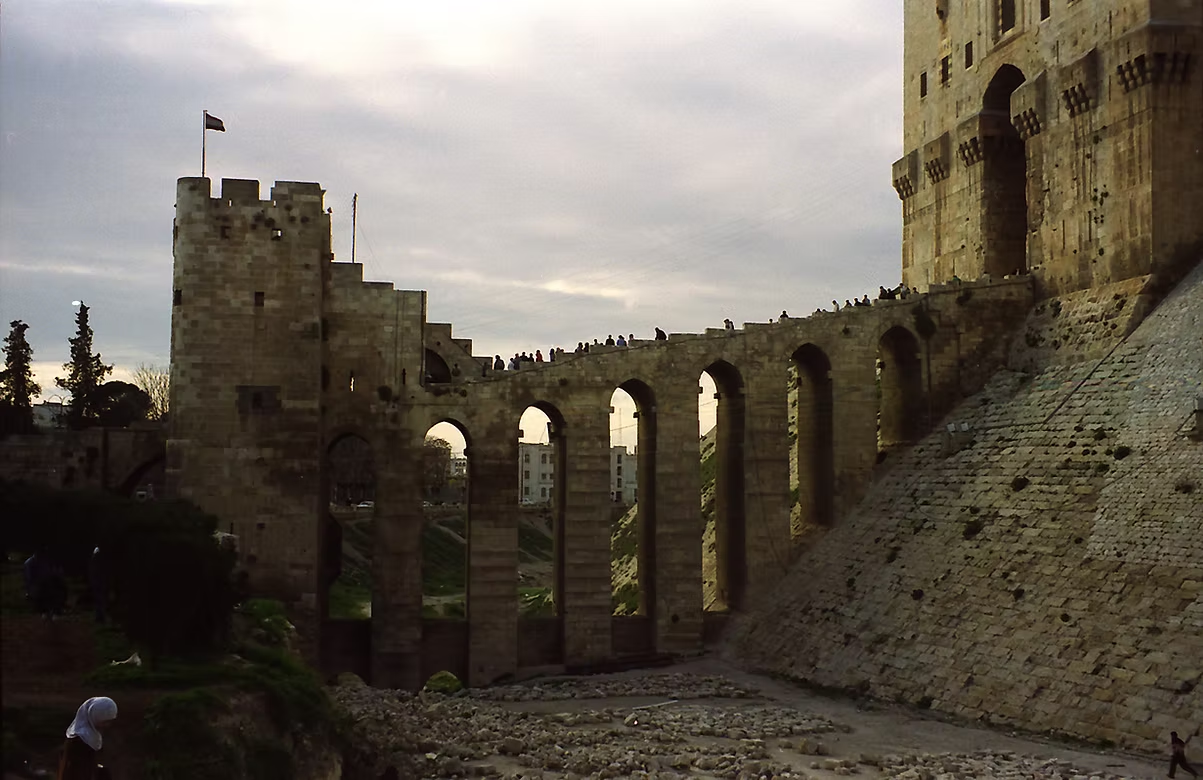
The smaller size of Aleppo made its Old City even more prominent than is the case in Damascus. Aleppo has a history of settlement reaching back many thousands of years. Until recently, the old city consisted of buildings dating from the 12th to 16th Centuries interspersed with Khans, mosques and madrasas that were been largely unchanged since their construction.
A few of the Ottoman courtyard houses had been converted into boutique hotels that, before the war, enabled tourists to stay in the Old City. There were also many excellent restaurants that specialized in distinctive Aleppo cuisine and wines grown by Christian families in the surrounding hills.
Aleppo was also the base for visiting Deir Samaan (the Basilica of St Simeon Stylites) that is about 30kmn north and to the Byzantine Dead Cities that are about 25km to the West. Photos of both sites are shown separately below.
The shops in the souk sold a huge range of food, everyday items as well an antiques, textiles and handcrafts. We spent much of the time that we visited Aleppo just wandering through the souk as well as visiting the mosques and khans that are scattered through it.
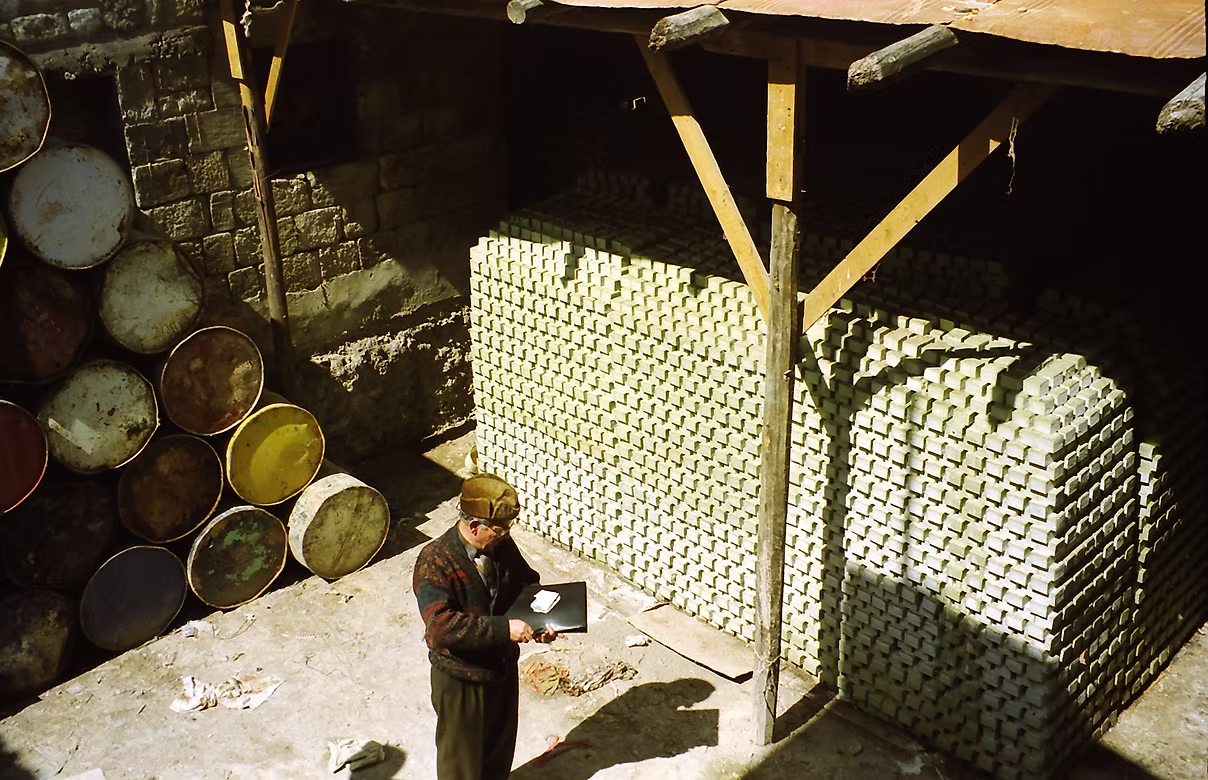
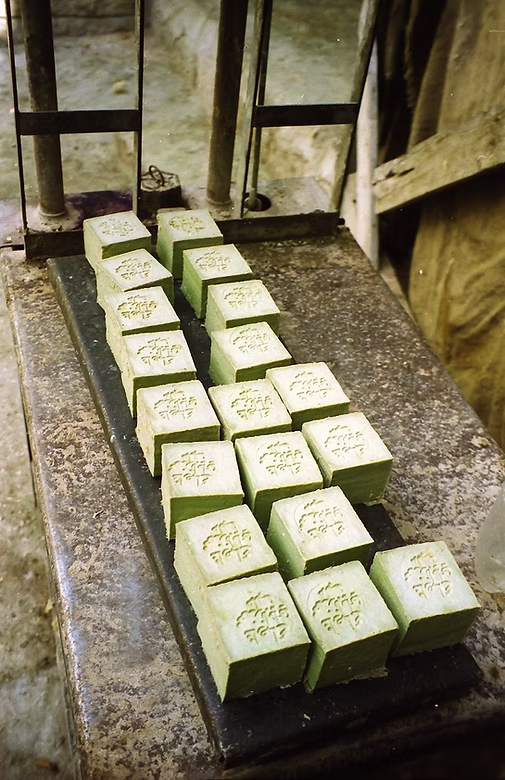
One of the distinctive products of Aleppo was olive and laurel oil soap that was hand made in small factories, one of which we visited. The quality of the soap varied depending on the relative proportions of the oils and the time that they had been aged. The soap was mixed and then poured onto a tiled floor where it was left to harden. It was then cut into blocks by men pushing a wooden sledge with a knife beneath it, stamped with the maker’s name and then stacked in piles for ageing.
This all changed as a result of Aleppo being a center of resistance to the Assad Government during the Civil War. Both Government and Opposition forces used the ancient buildings of Aleppo as fortifications and an estimated 30% of the old city has been destroyed by shelling and bombing. Much of the Aleppo souk was destroyed by fire in 2012. The following year, the unique minaret of the Great Mosque of Aleppo (built in 1094) was completely destroyed and the rest of the Mosque was badly damaged.




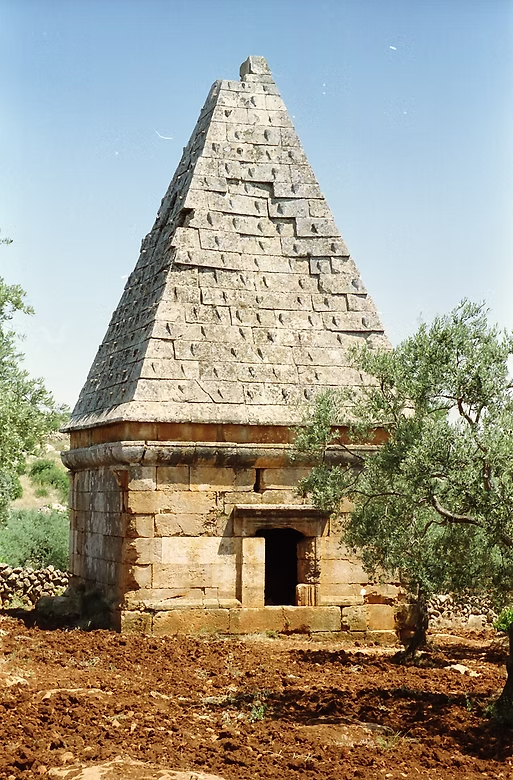
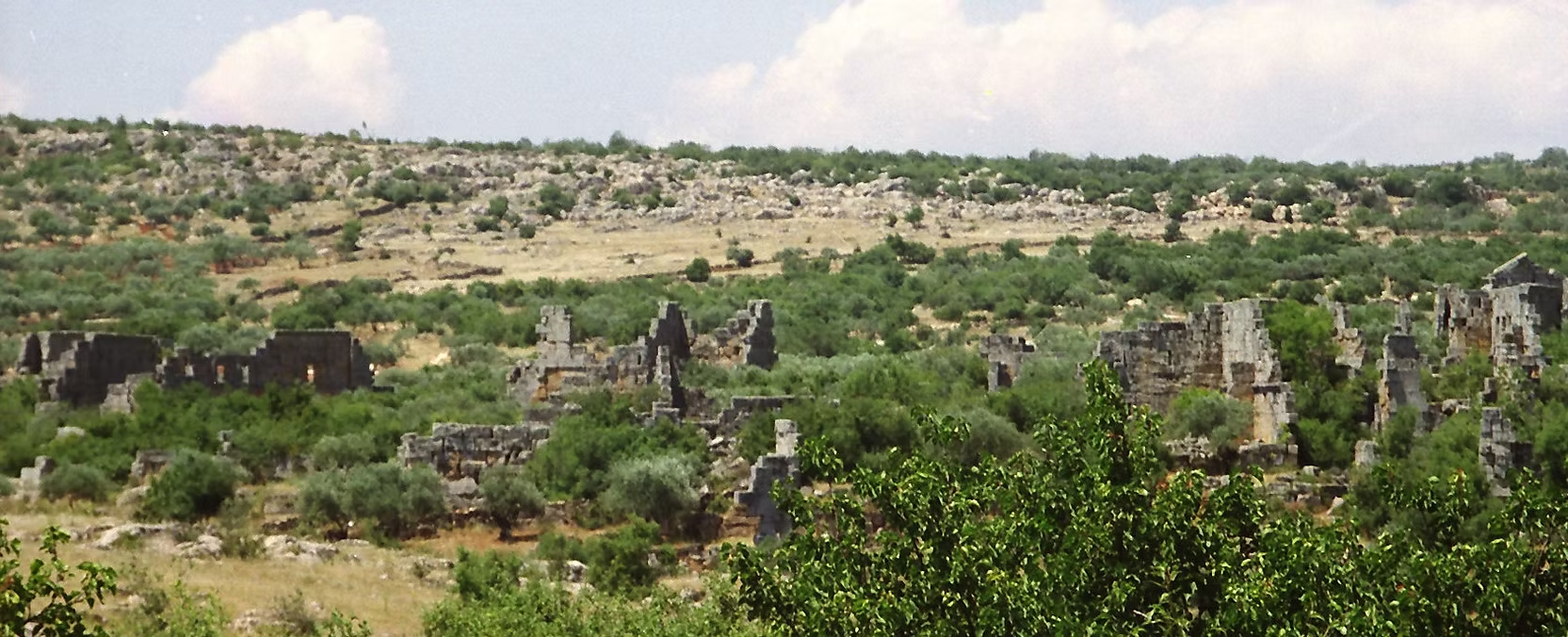

Byzantine Dead Cities & Hama
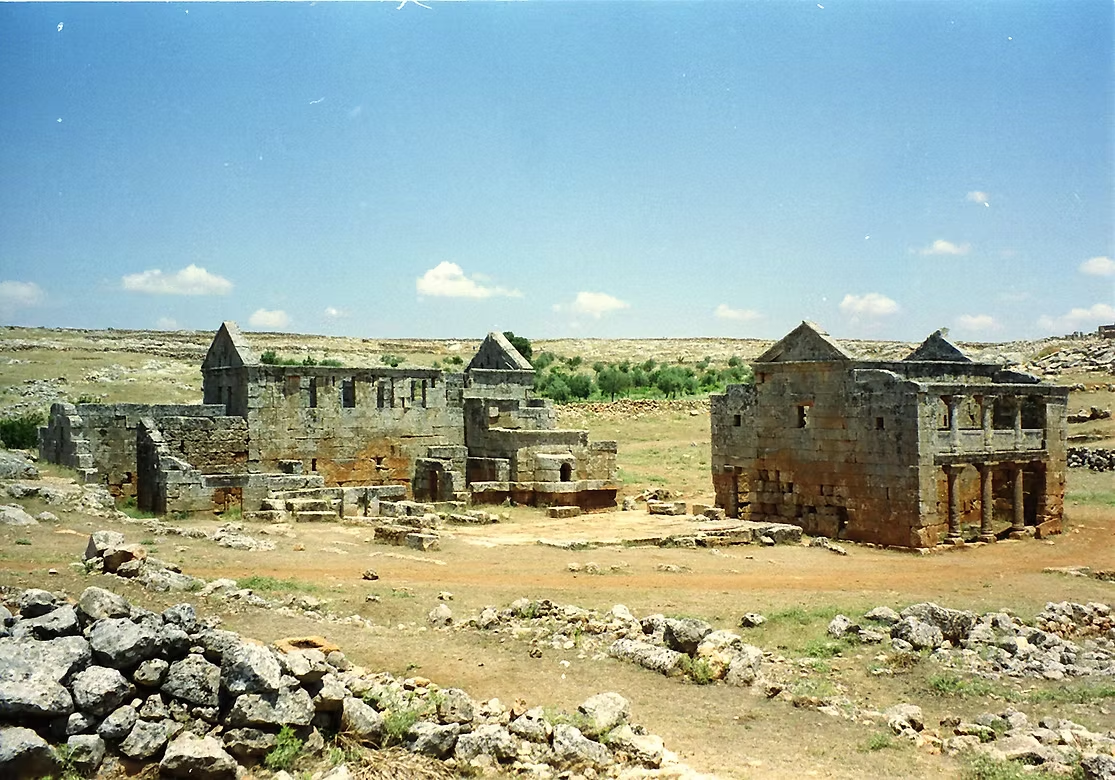
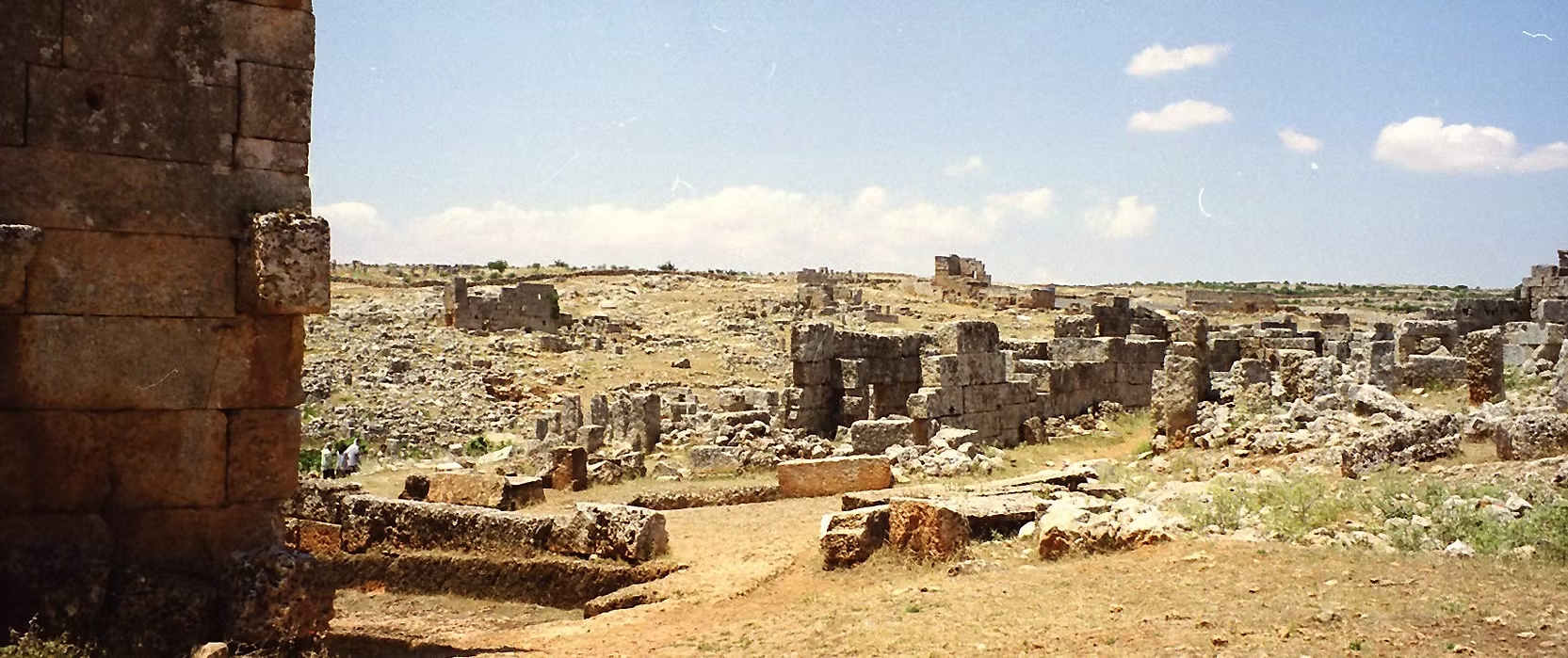
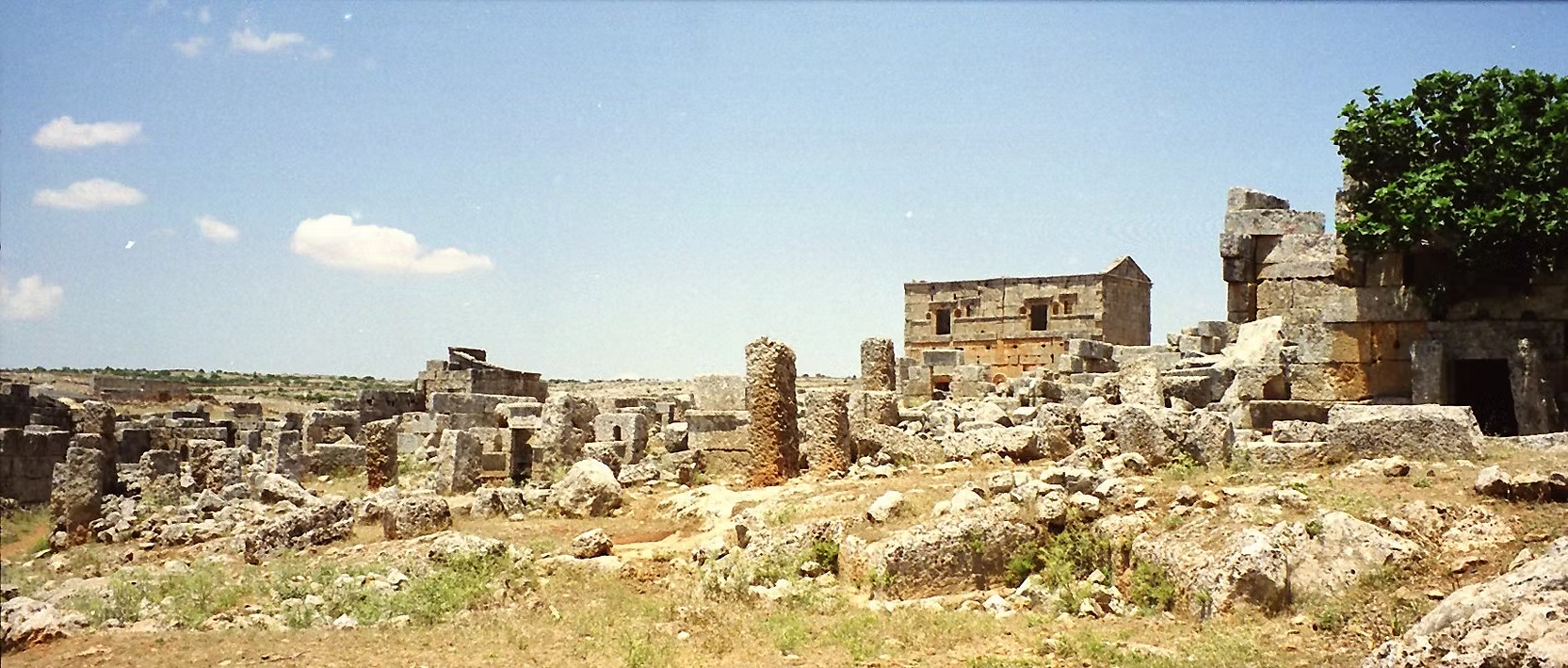
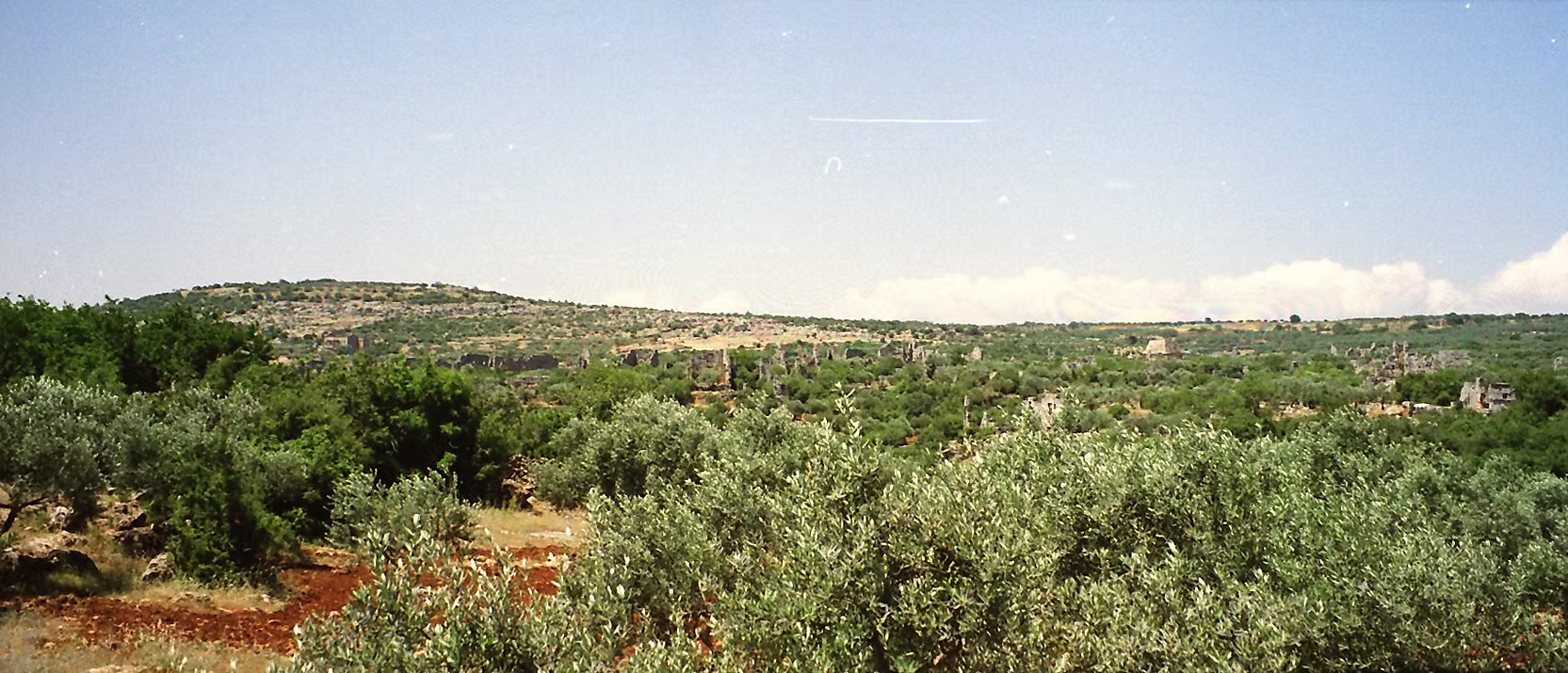
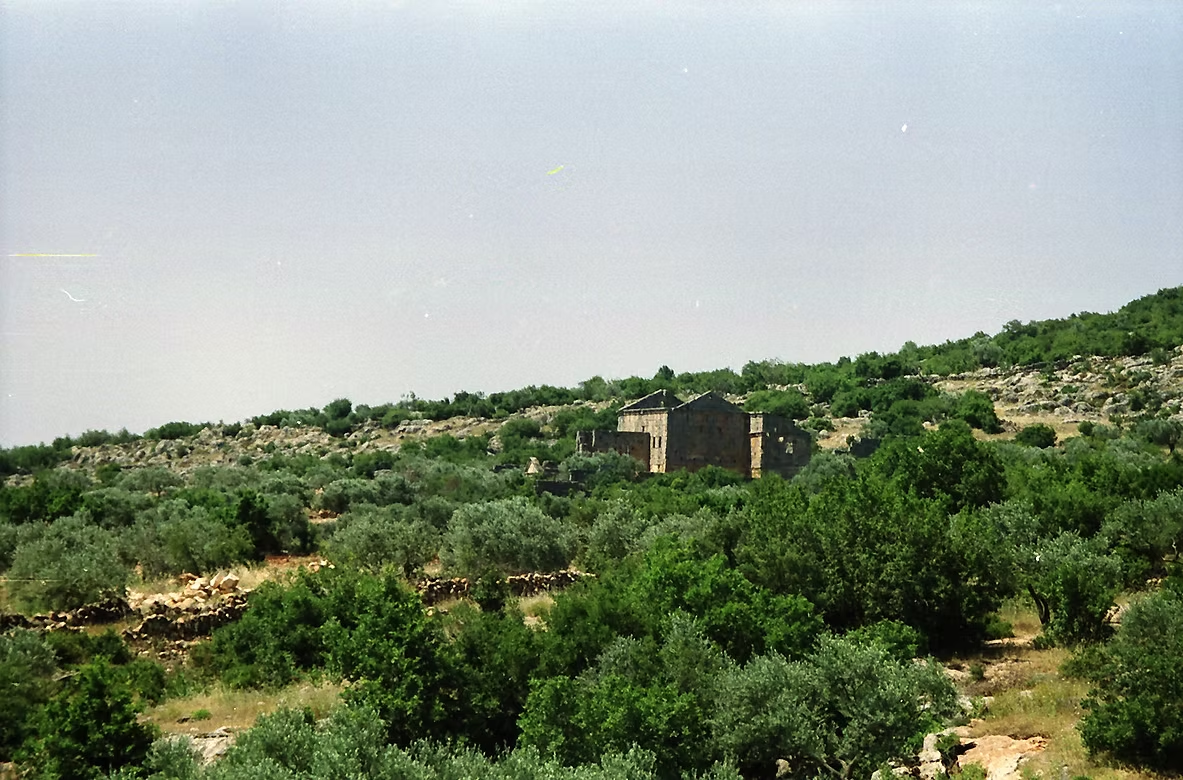
To the south west of Aleppo between the Damascus-Aleppo highway and the Orontes River there are the remains of many towns, villages and individual sites that date from the end of the Roman era to the Byzantine Christian era.
Built between the 1st and the 7th Centuries, they were abandoned between the 8th and 10th Centuries for reasons that are not well understood. They are spread across a large area about 140km long by 20-30km wide between Aleppo and Idlib. They were remarkable for their state of preservation with the remains of temples, churches, monasteries, hammams and houses.
Since this area was a center for groups opposing the Syrian Government, it is likely that many of these sites have been damaged either by fighting or by looting.
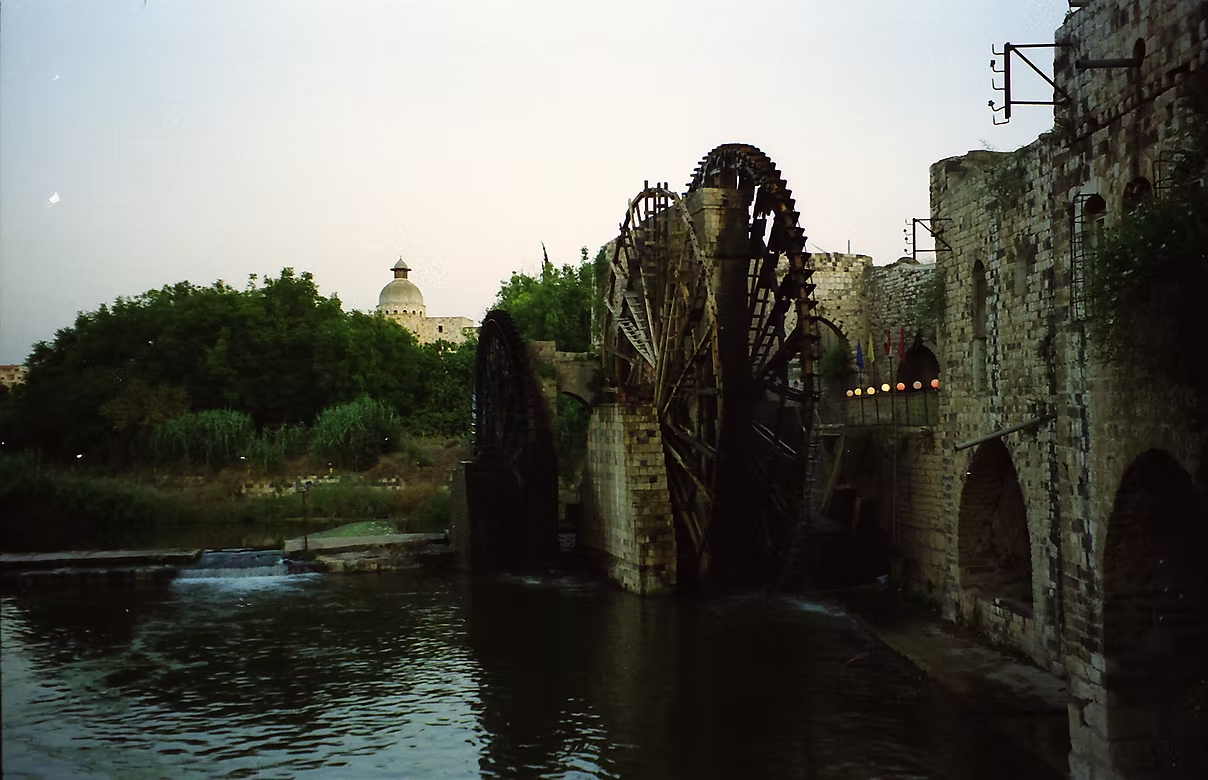
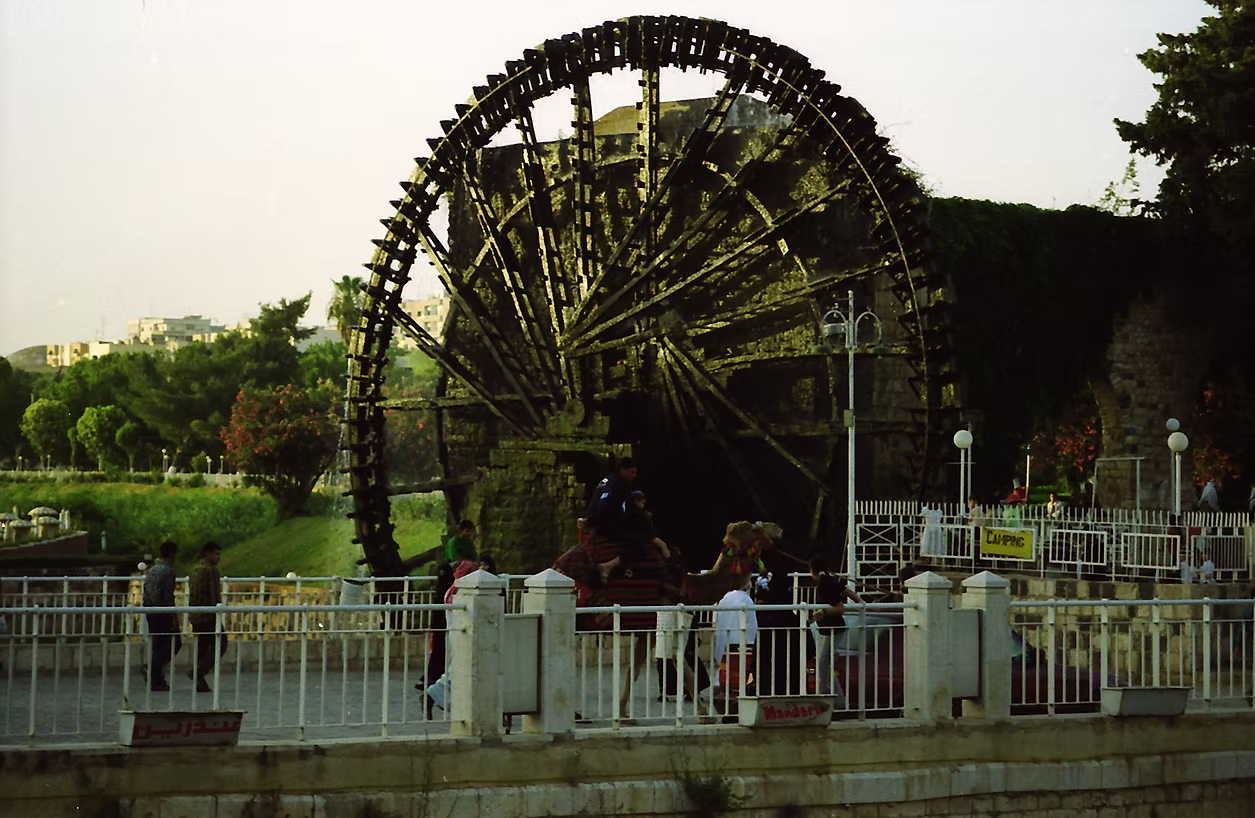
Hama is 137km south of Aleppo and the departure point for the ruins of the Roman city of Apamea. It is a town of about 800,000 people and notable for the 17 norias or waterwheels that raise water from the Orontes River to the fields above. The creaking of these norias can be heard throught the central area of the town. Hama has a previous history of opposition to the Assad Government that resulted in part of the town being destroyed in 1981-82.


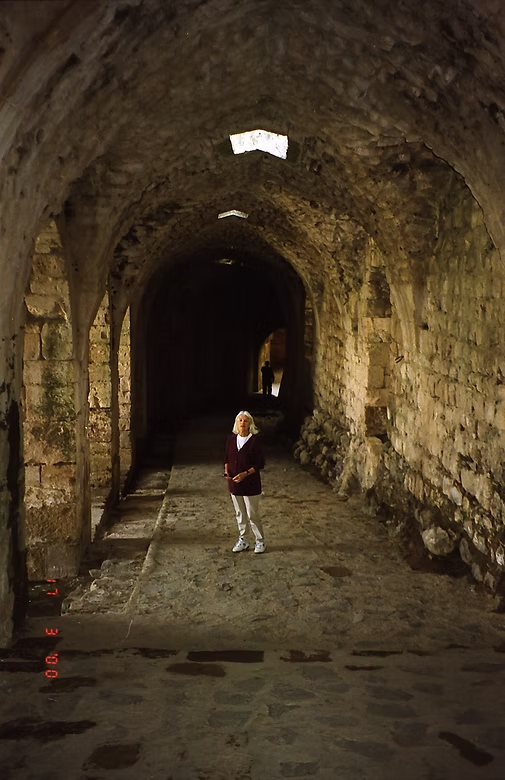
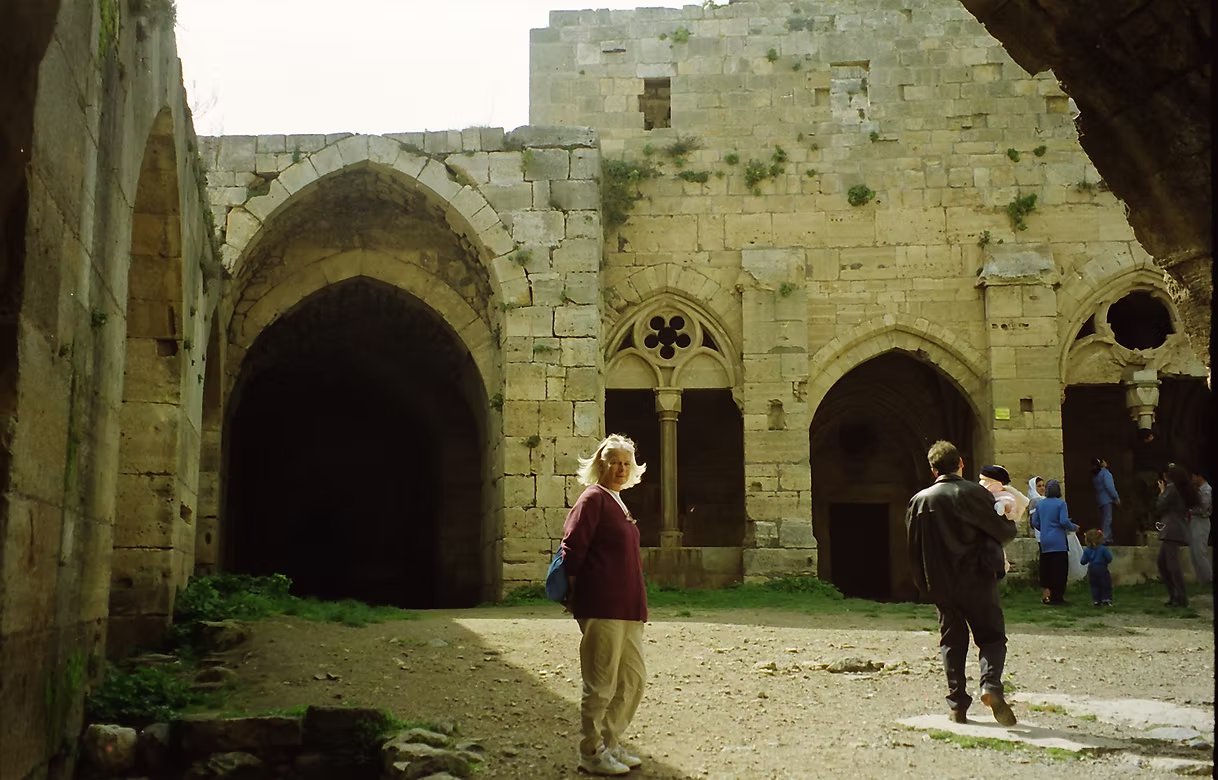
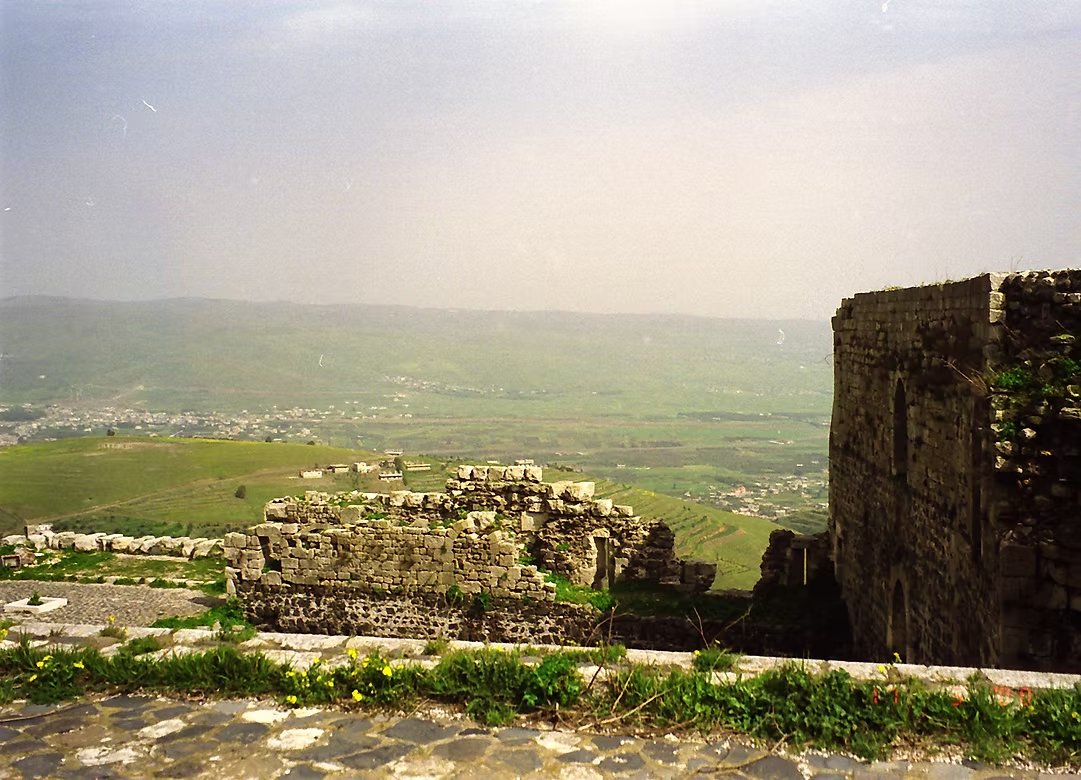
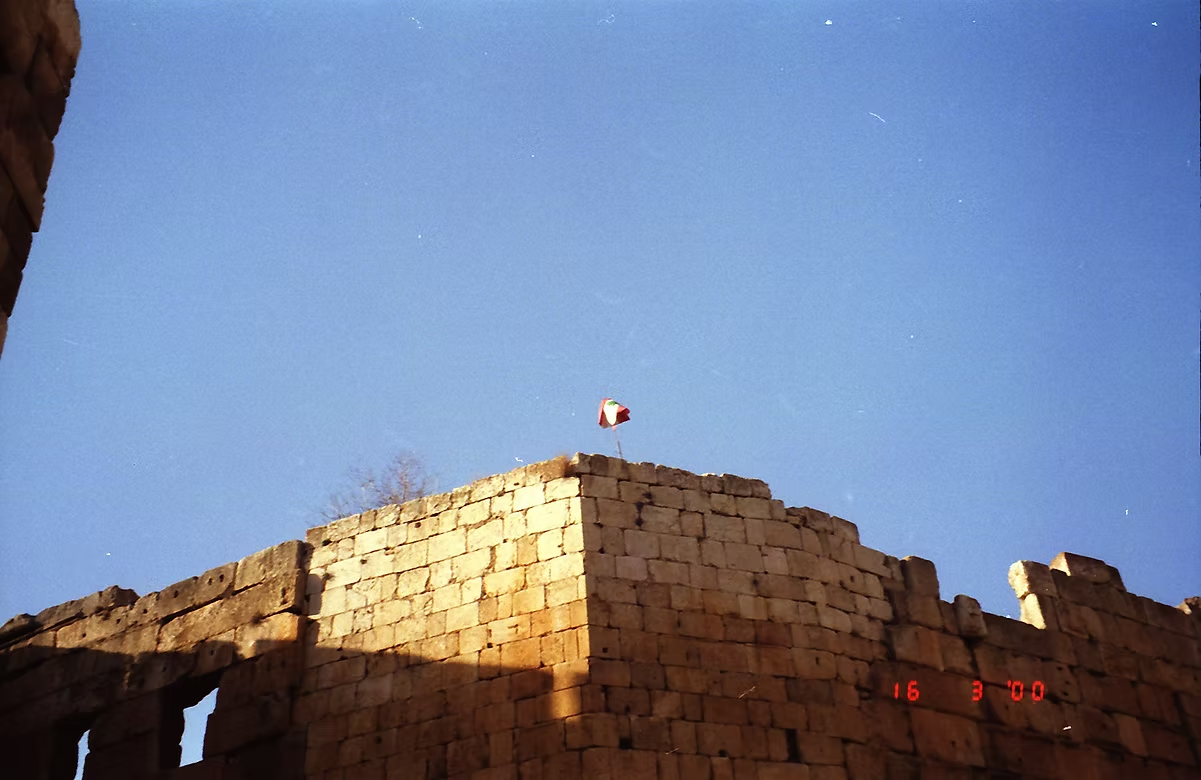

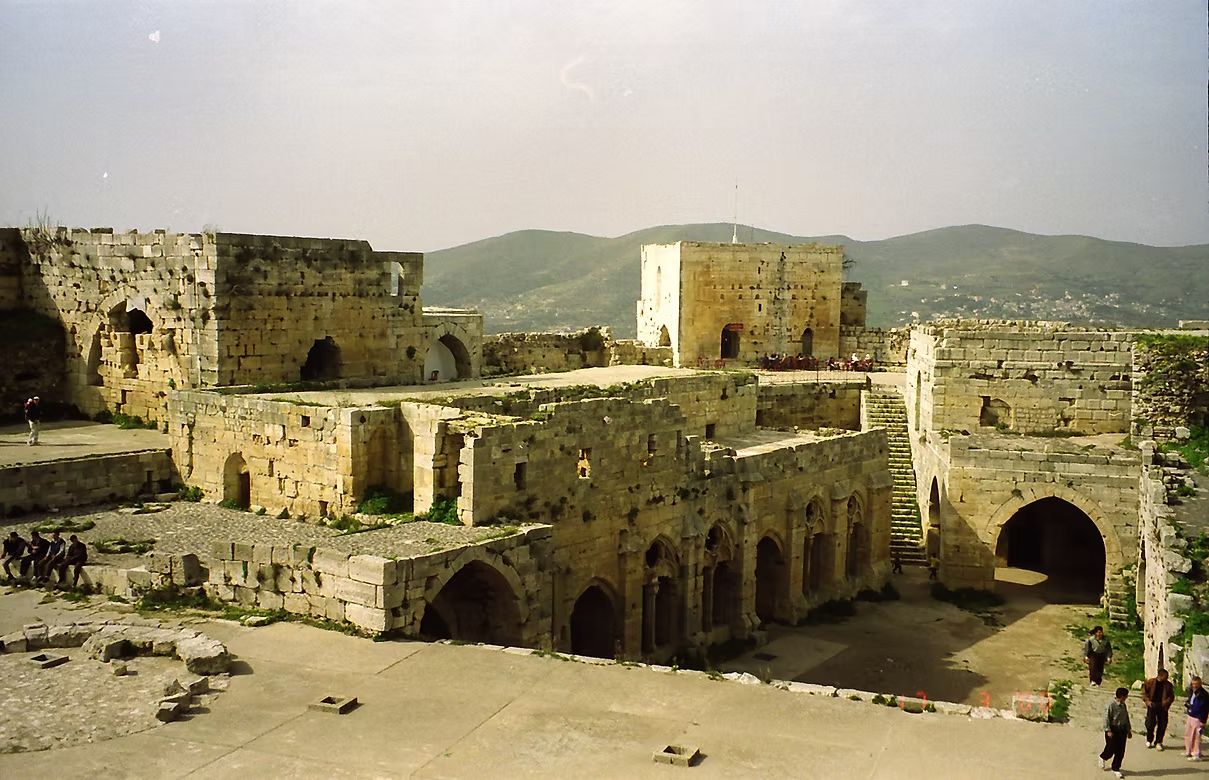

Krak des Chevaliers
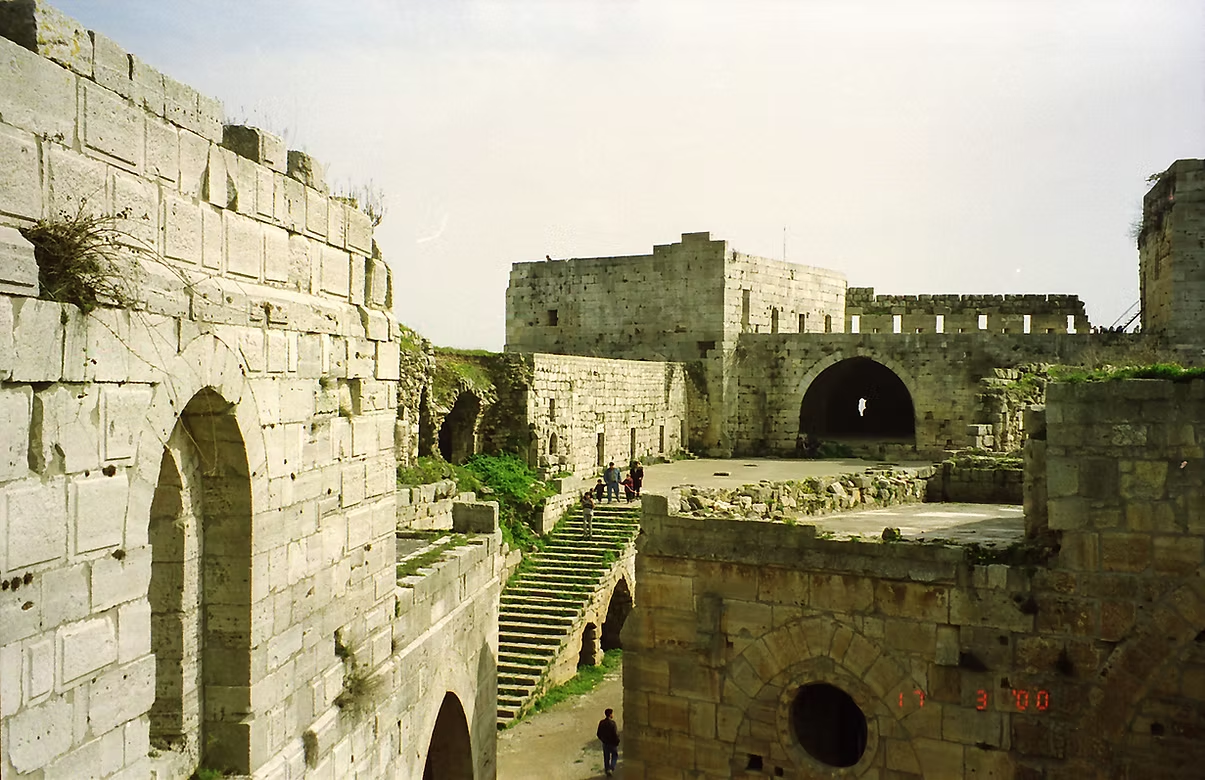
T E Lawrence described this place as ‘perhaps the best preserved and most wholly admirable castle in the world’.
It was taken by the Crusaders around 1140 and remained under their control until 1271 when it was surrendered to the Ottomans. It is about 4km west of Homs close to the border with Lebanon. It is built on a rocky spur overlooking the road between Tartus and Homs.
It’s location means that it can only be approached from one side and there are series of gates with fortifications above that defend the approaches. It was never taken but was surrendered by the Crusaders probably as a result of a ruse by the Muslim army that besieged it. The Ottomans then repaired and occupied it so the decoration is a mix of Crusader and Islamic.
The interior was wonderfully preserved with much of the decoration of interior rooms intact. It is likely to have been damaged during the Civil War having been subject to shelling and air attack.

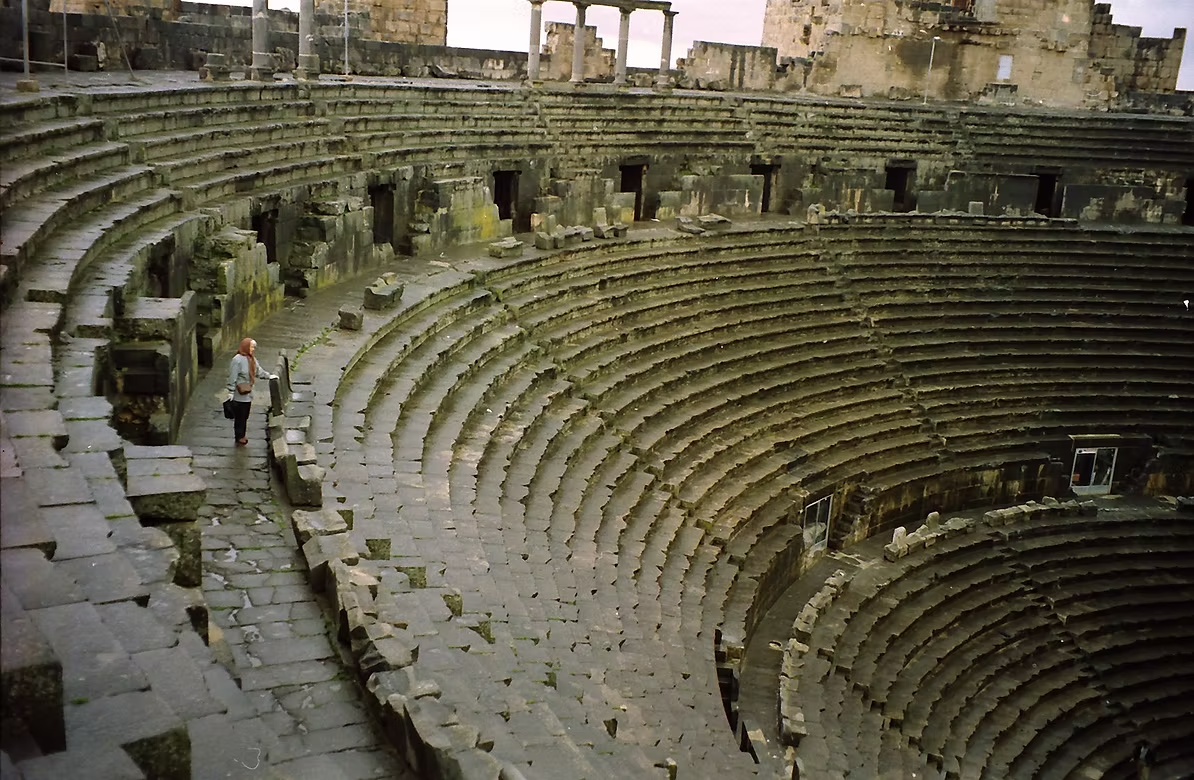



Bosra & Apamea
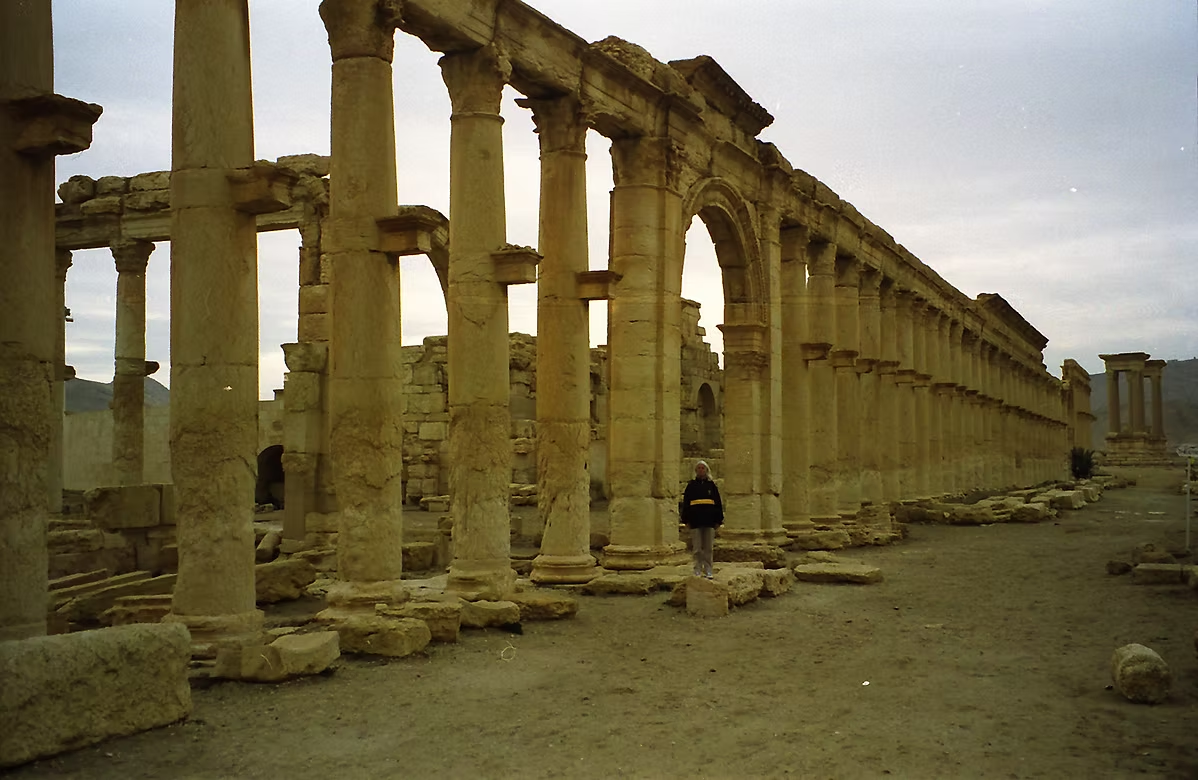
While they are at different ends of Syria, these two sites are some of the most impressive Roman remains that you will see anywhere in the world. Apamea was a large city on the banks of the Orontes River and about 55km from Hama. It is completely in ruins but the parts that had been excavated included a colonnade that runs for 2km – the longest in the Roman world.
The town was founded by the Greeks in about 300 BC and reached its peak in Roman times before being destroyed by an earthquake in 115AD. It was rebuilt and occupied during the Arab conquest before being destroyed again by an earthquake and abandoned in the 12th Century.
The site was deserted when we visited but locals were surreptitiously offering Roman pieces for sale in the streets of the nearby village. Such looting is likely to have increased in recent years.
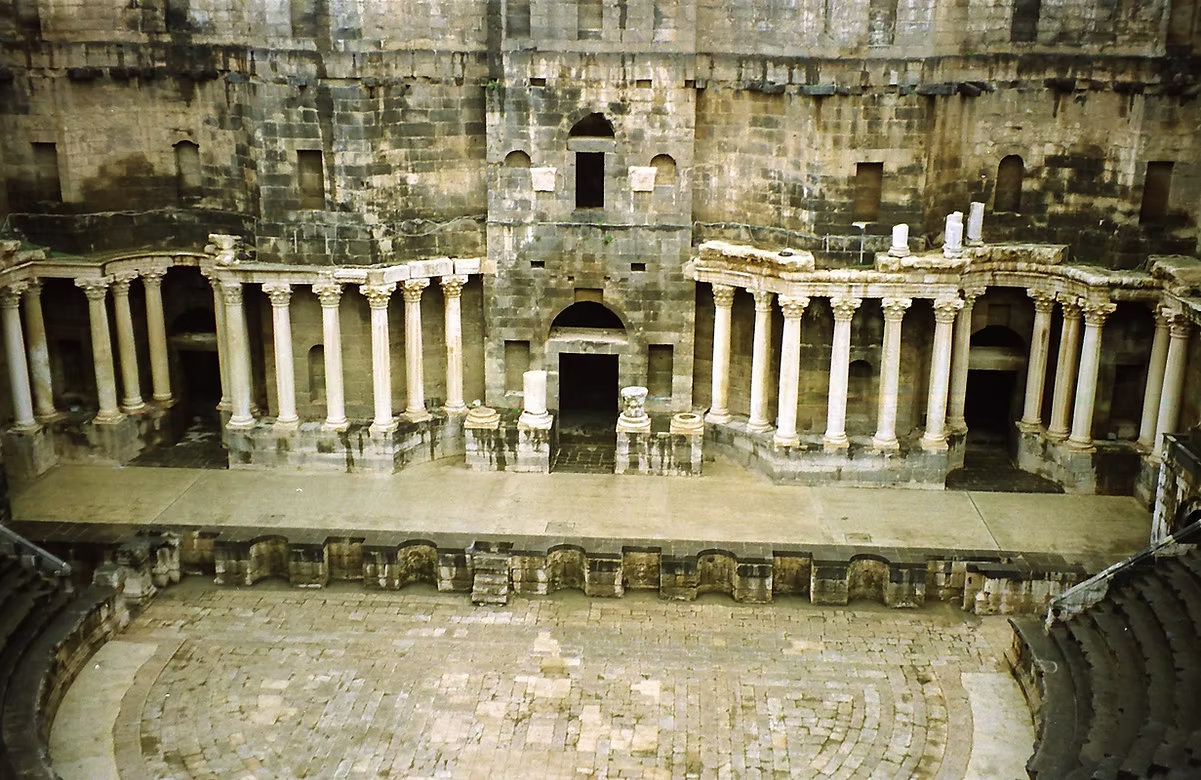
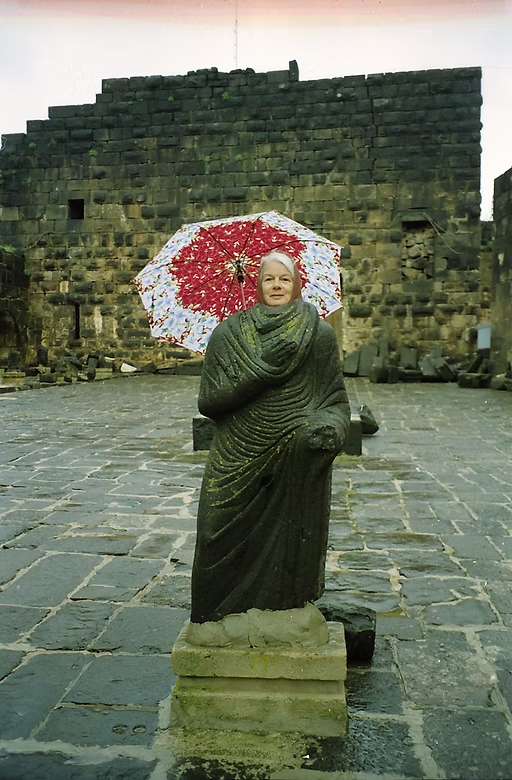
Bosra is a small town in the far south of Syria (close to the border with Israel). In Roman times it was a substantial city in Roman times and has a large Roman theater from the 2nd Century that is built with black basalt. A later Arab citadel had been built around it and the theater was remarkably preserved as a result of being buried in sand until excavated after 1946.
The theater seats 17,000 and has perfect acoustics from any seat. Until the Civil War, the theater had been used for an annual festival. It was bombed by the Assad Government in 2015 during a battle to re-capture the town.


Lebanon
Lebanon is one place that we visited not long ago (2019) as well as around 2000 and living standards had steadily declined in the intervening period. It was even more densely populated but with substandard houses being built without any clear planning. The power went off regularly and the immense gap between rich and poor had created areas to the south of the city where it was not safe to walk at night. The ongoing unrest following the blast at Beirut Port in 2019 has further illustrated the political and economic problems of the country.
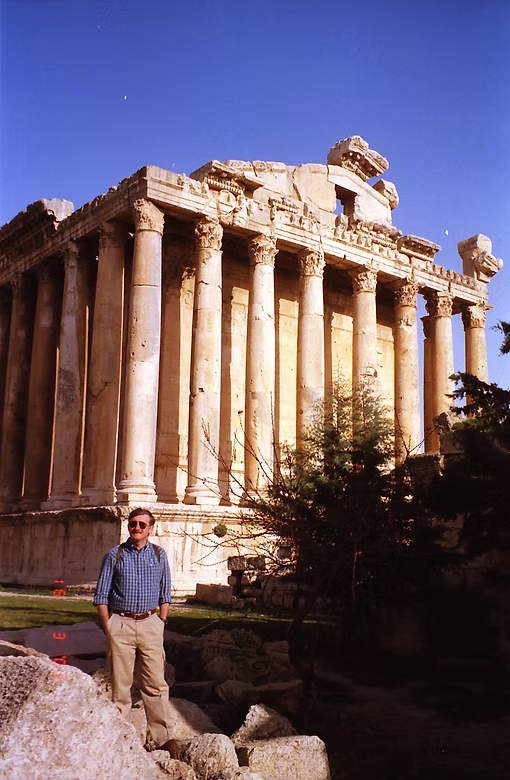
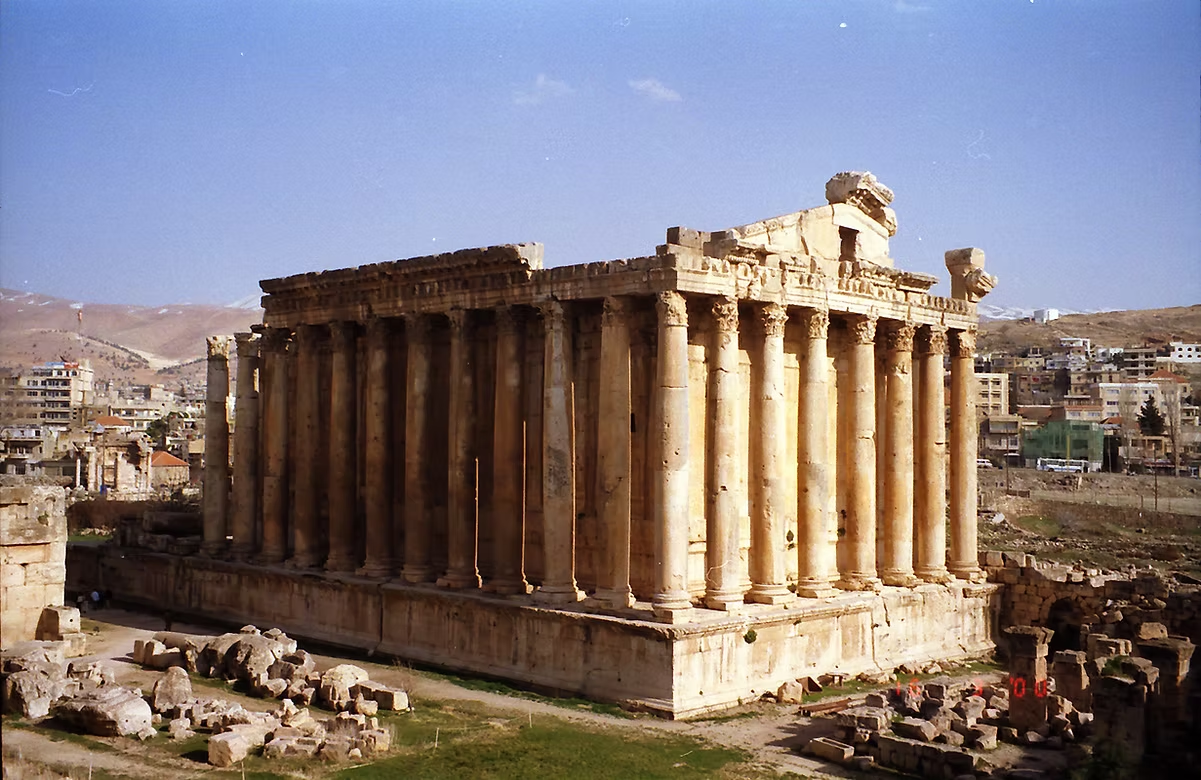
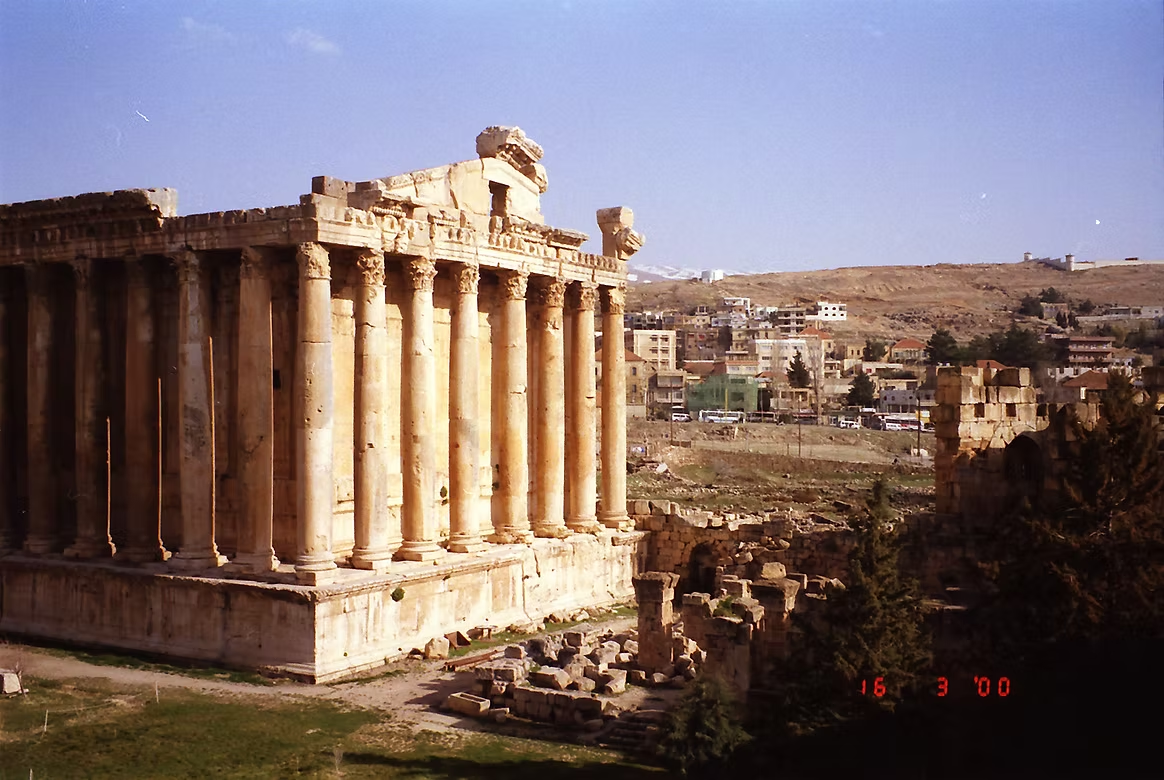
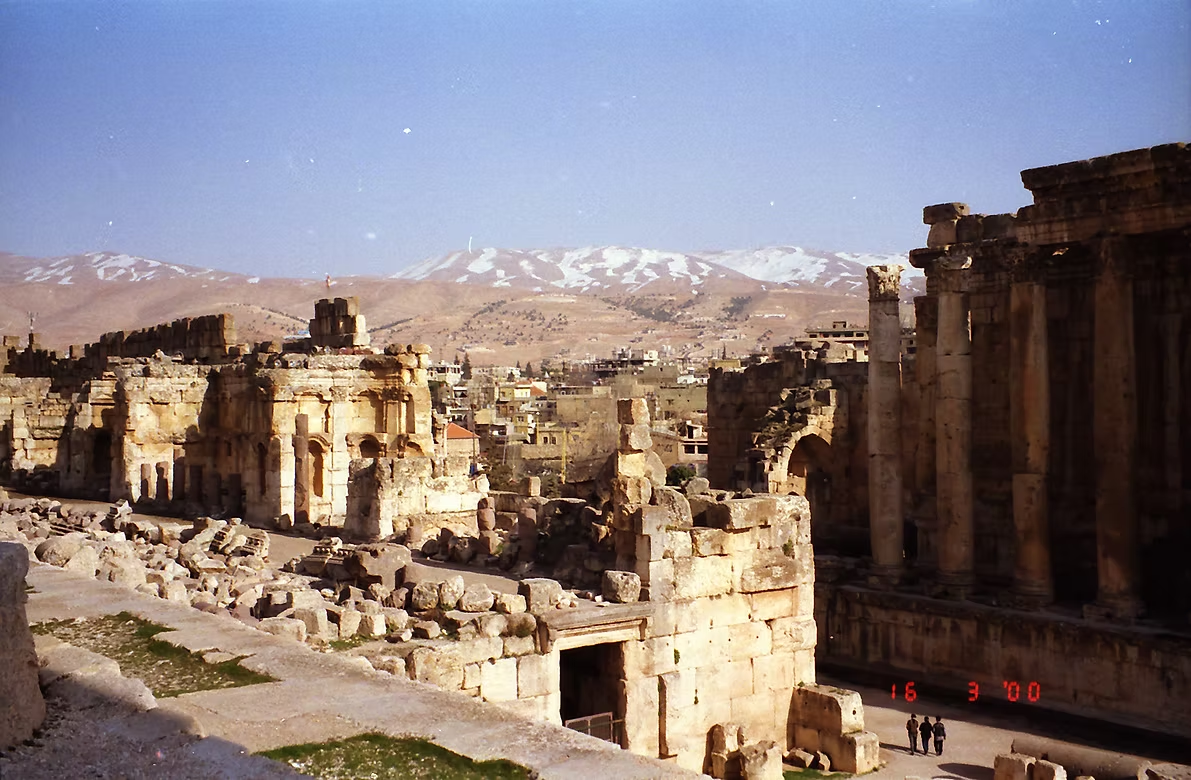
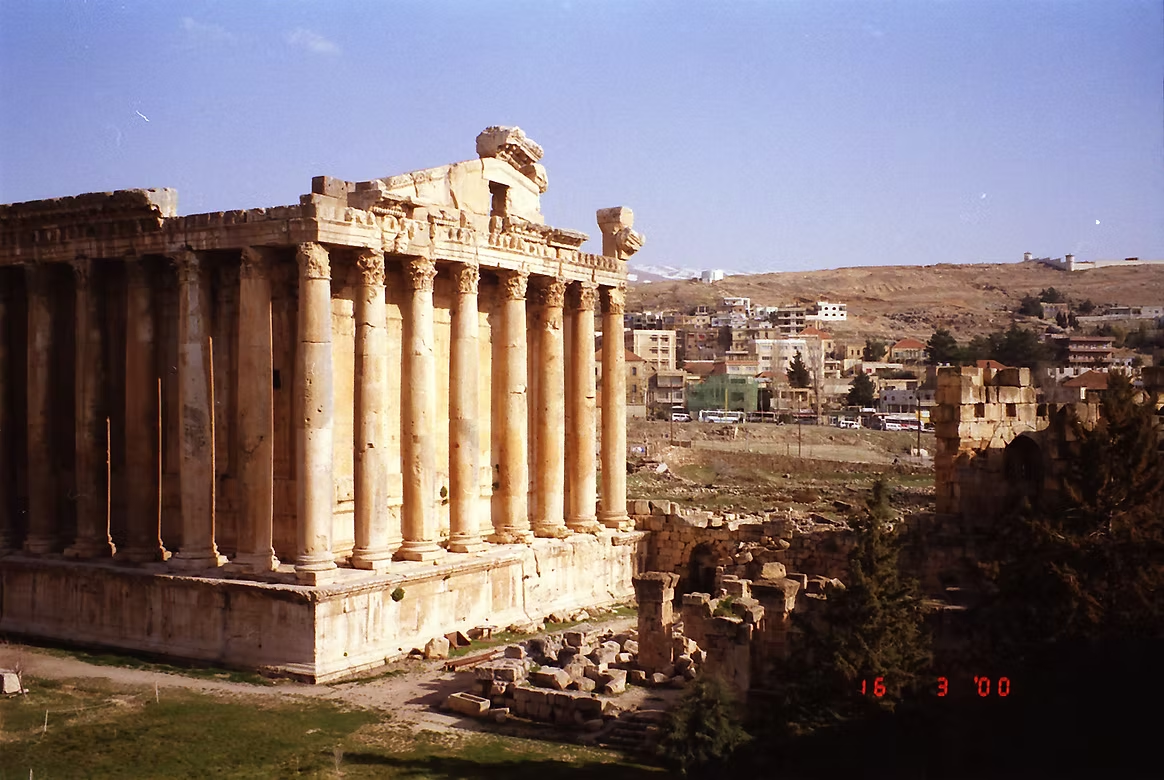
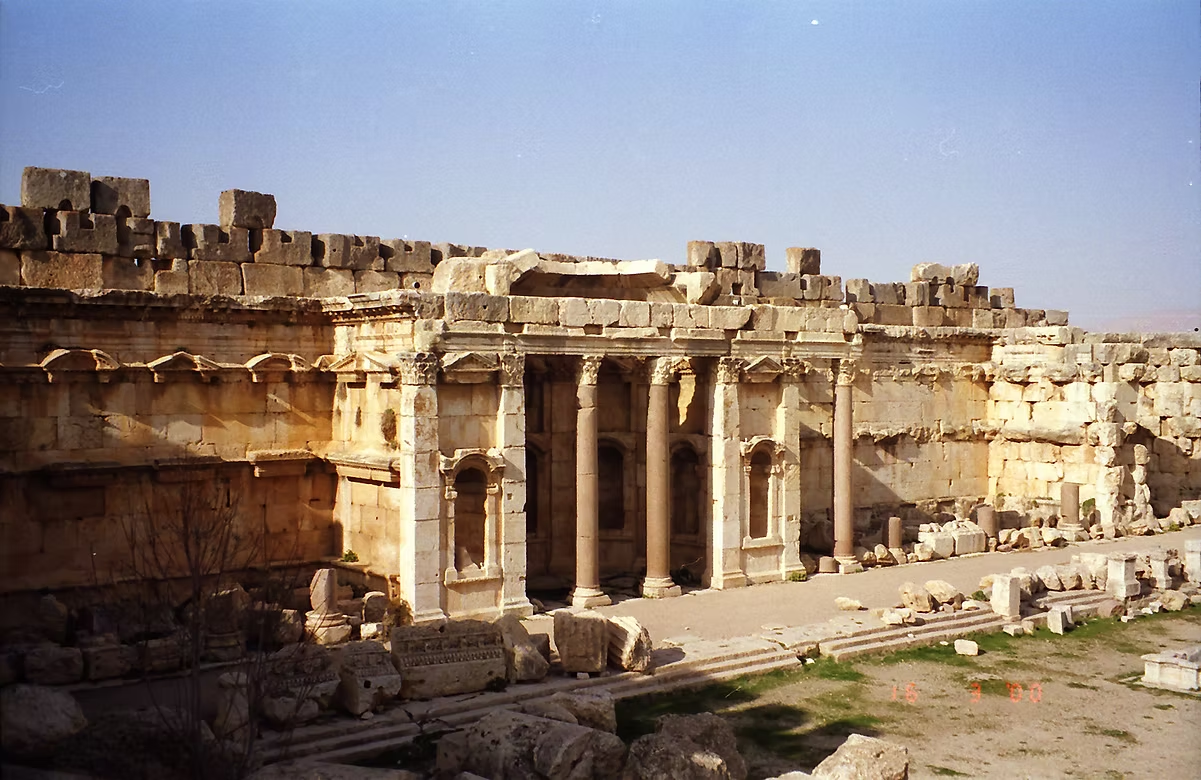
Lebanon was created by the colonial powers a century ago and has a heritage very similar to that of its near neighbor Syria. It has some extraordinary Roman remains like the Temple of Jupiter at Baalbeck, Crusader and Arab fortresses and the remains of the Phoenician city of Byblos. The main difference is the areas of the north where the majority of people are Christian with ancient churches that go back to Byzantine times.
Baalbeck is located in the Beqaa Valley inland of Beirut and between the Lebanon and Anti-Lebanon Ranges. The valley is the main agricultural area of Lebanon and grows a huge range of produce including some very good wines like Chateau Musar. The city of Baalbeck was, and is, the main center of Hezbollah – the Iranian backed military and political party that is one of the main players in Lebanese politics. When we visited in 2000, there were very few tourists during the day and none at night. But, as always in Syria, local people were friendly and welcoming as we walked around the town in the evening.
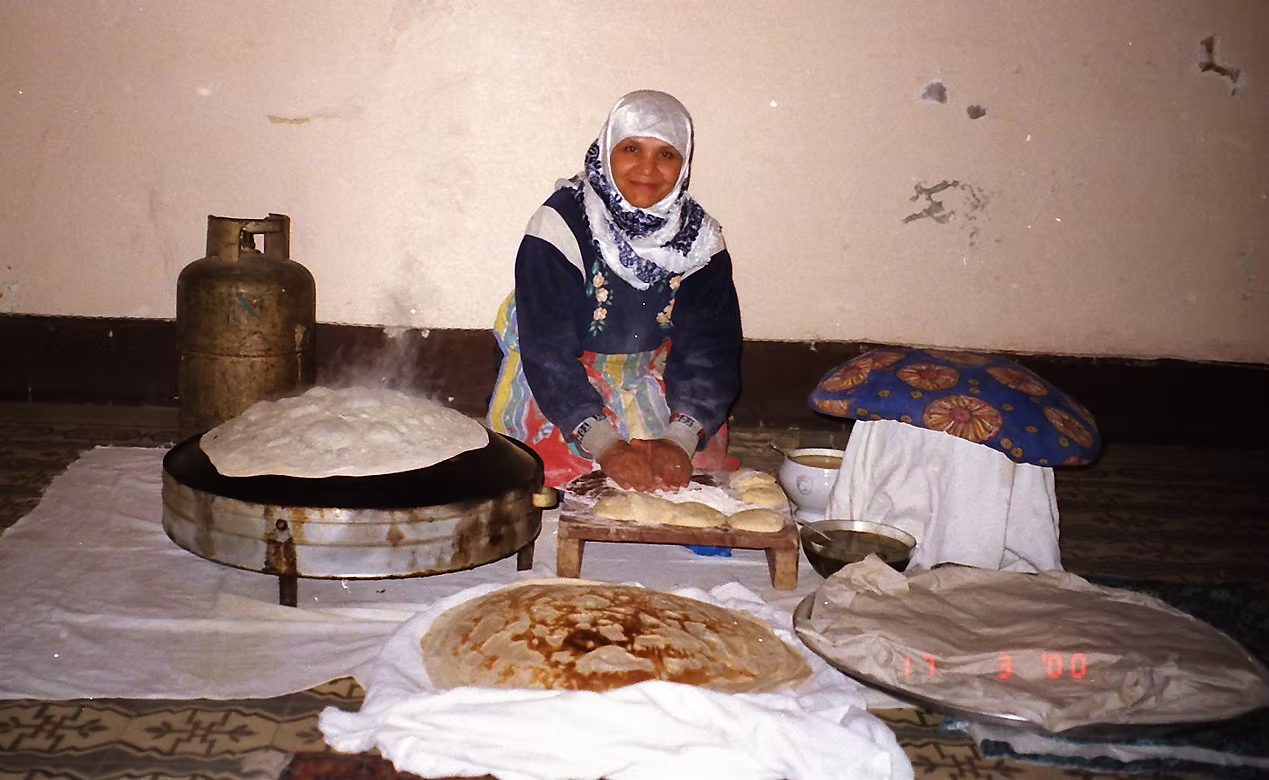
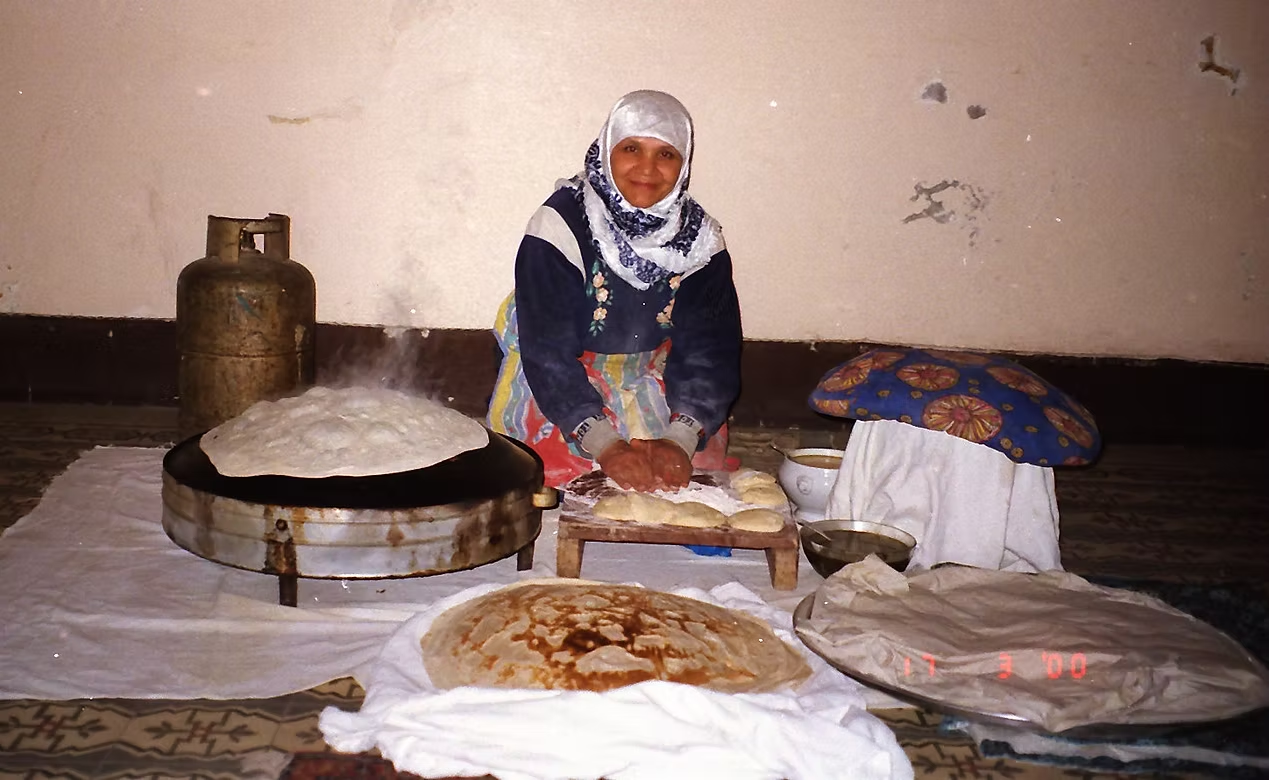
The most interesting place to stay is the Hotel Palmyra which was built in the late 19th Century and is a rambling building that hosted the rich and famous including Kaiser Wilhelm, the Shah of Iran, Charles de Gaulle, Einstein and many others who came to see the ruins just across the road. The rooms were still heated with ancient wood stoves whose flues passed through the high ceiling. The hotel has a faded grandeur about it and is staffed by people whom have worked there for decades. In the corner of the grand dining room at breakfast was a local woman cooking fresh mountain bread for the guests.
When I showed interest in the wines available at dinner the previous night, the manager showed me the stack of boxes that were the entire 1998 production of Chateau Musar that he had bought and had private labelled to commemorate the centenary of the visit of Kaiser Wilhelm. Now that the Civil War was over, he expected tourism to boom and I hope that he managed to sell them before the start of the Syrian War made Baalbeck again unsafe to visit.







Jordan
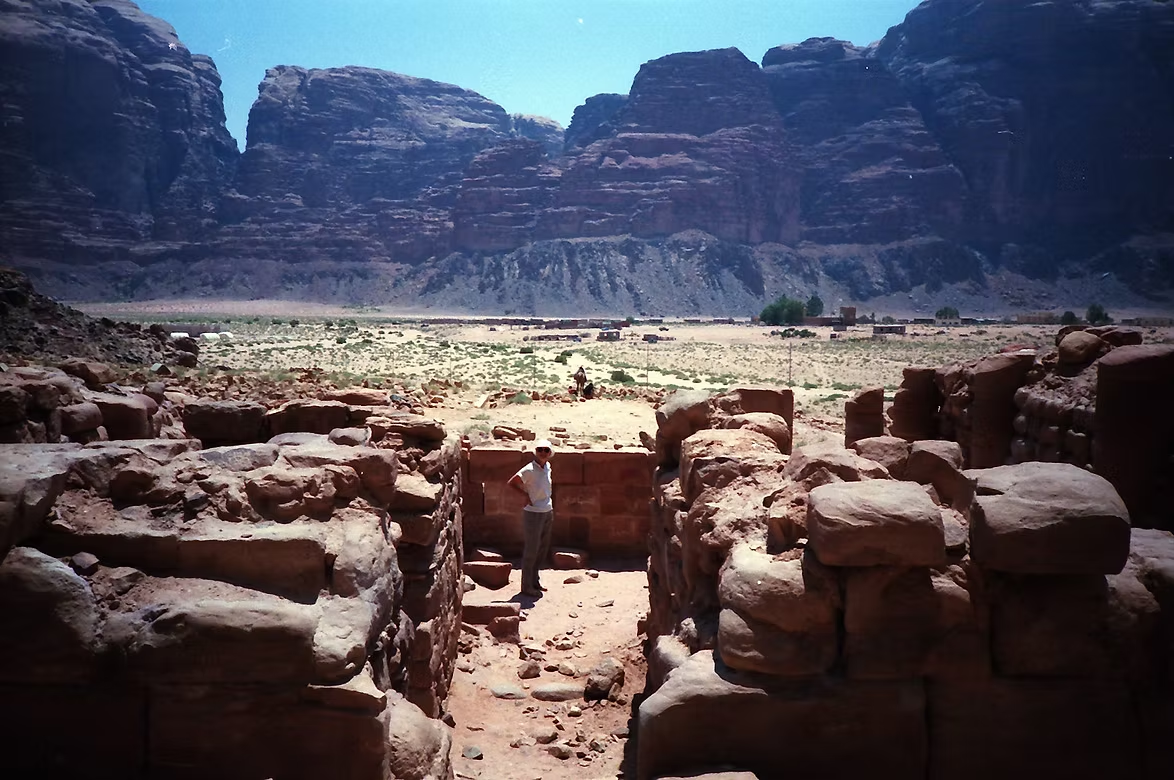
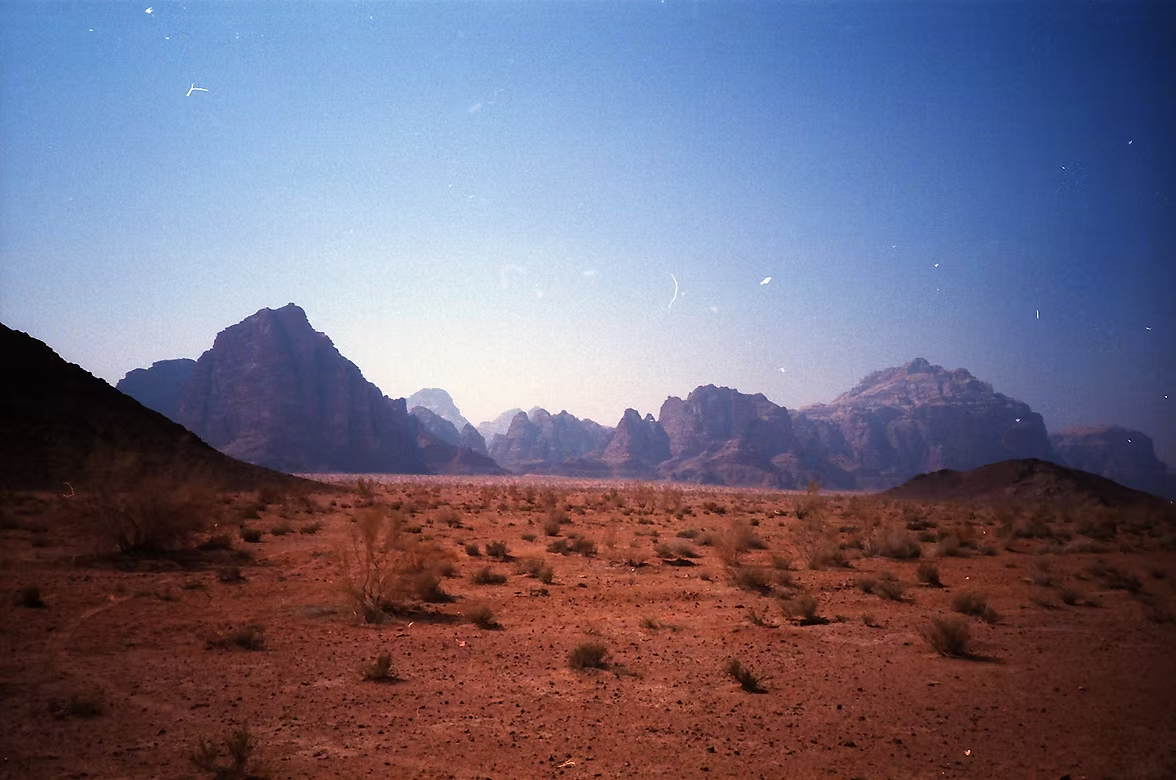
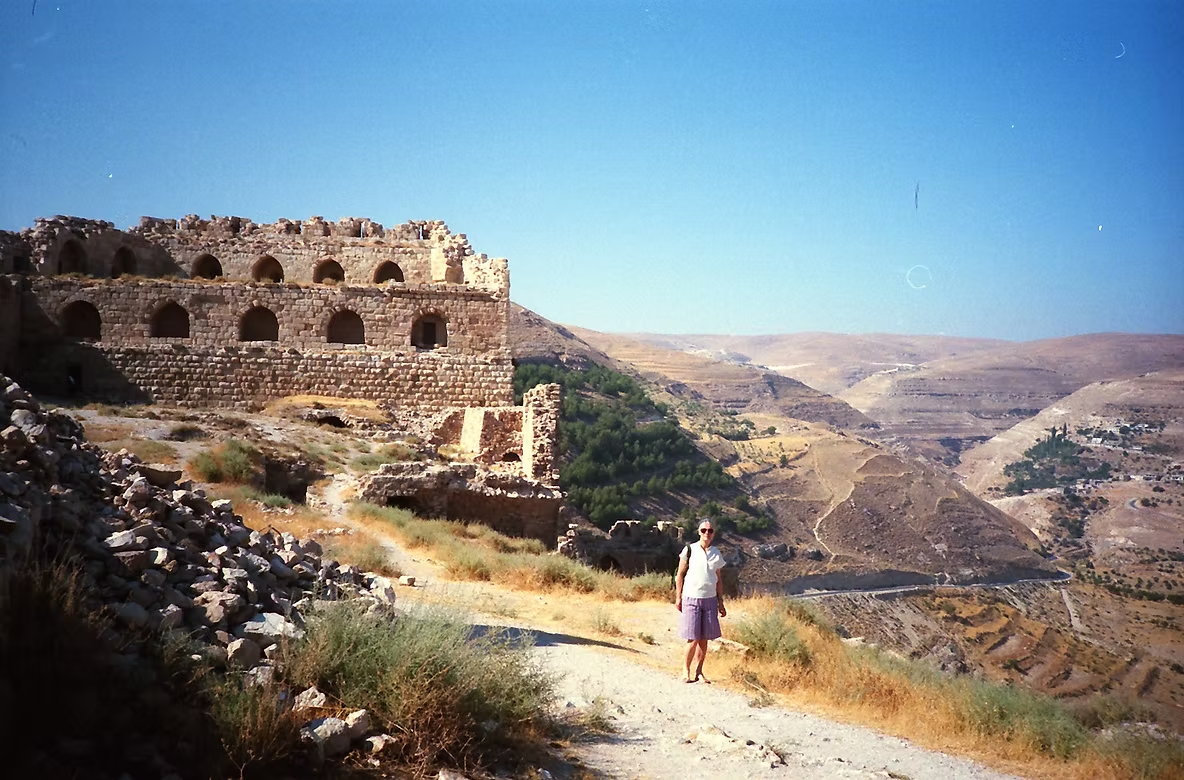
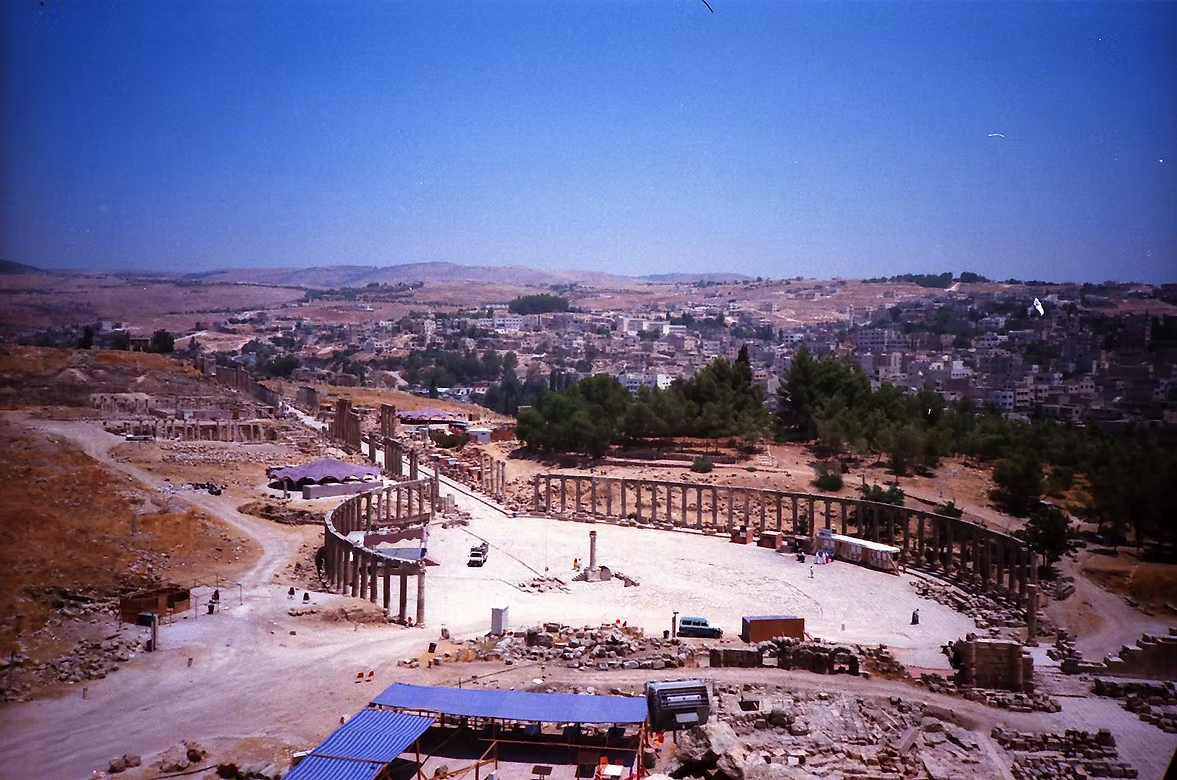
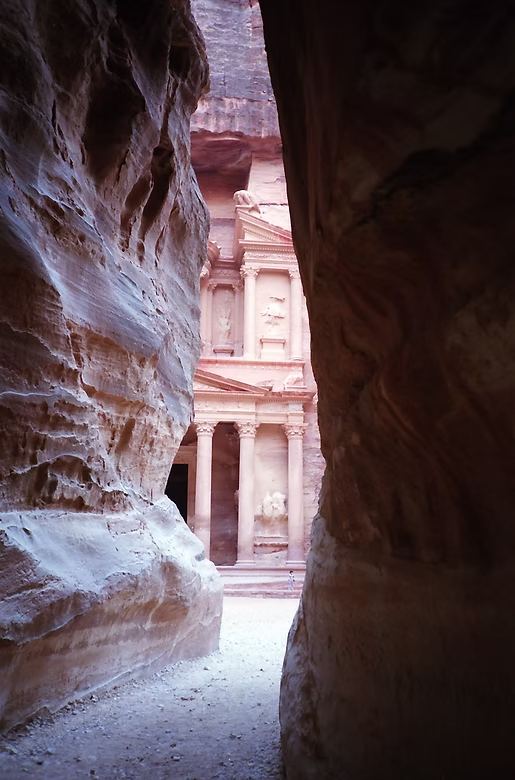
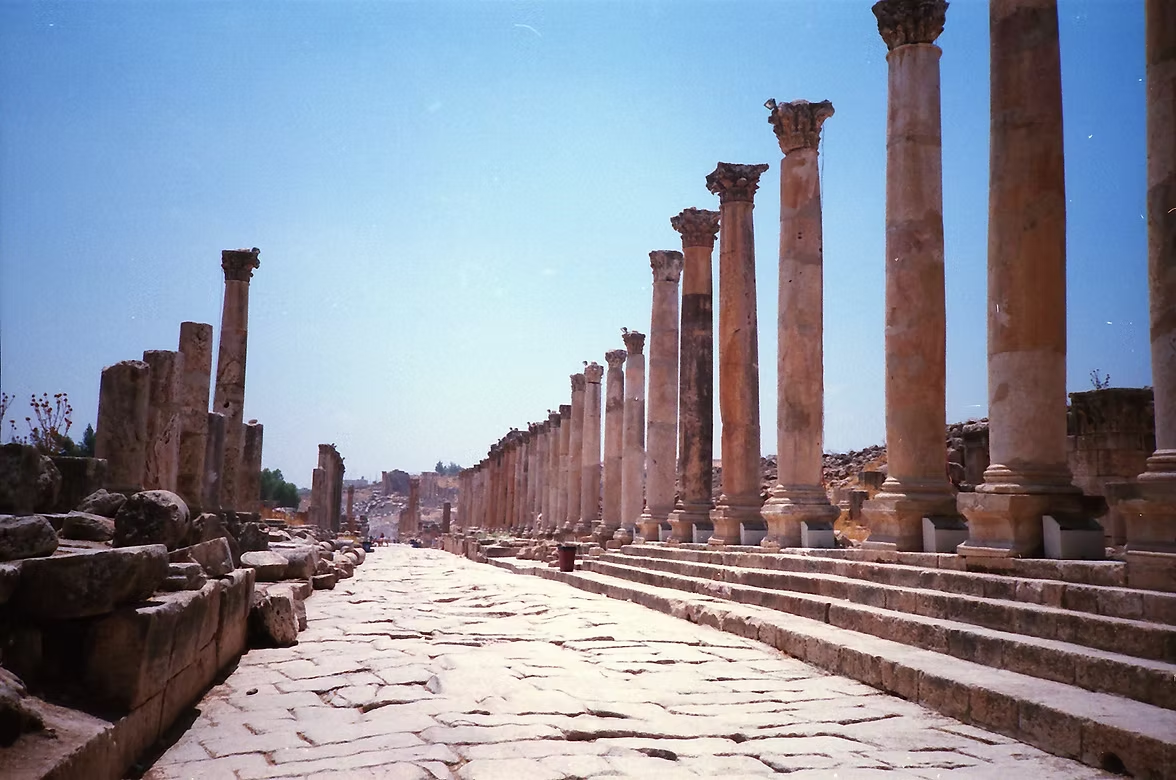
We visited Jordan for a week while on the way back to Australia in 1988 and drove from one end of the country to the other. As well as the ancient Nabatean capital of Petra, we visited the Roman city of Jerash in the north and the Crusader castle at Kerak as well as Wadi Rum and Aqaba. At that time, there was limited tourist infrastructure with only one Government hotel at Petra and very few tourists at any of the sites.
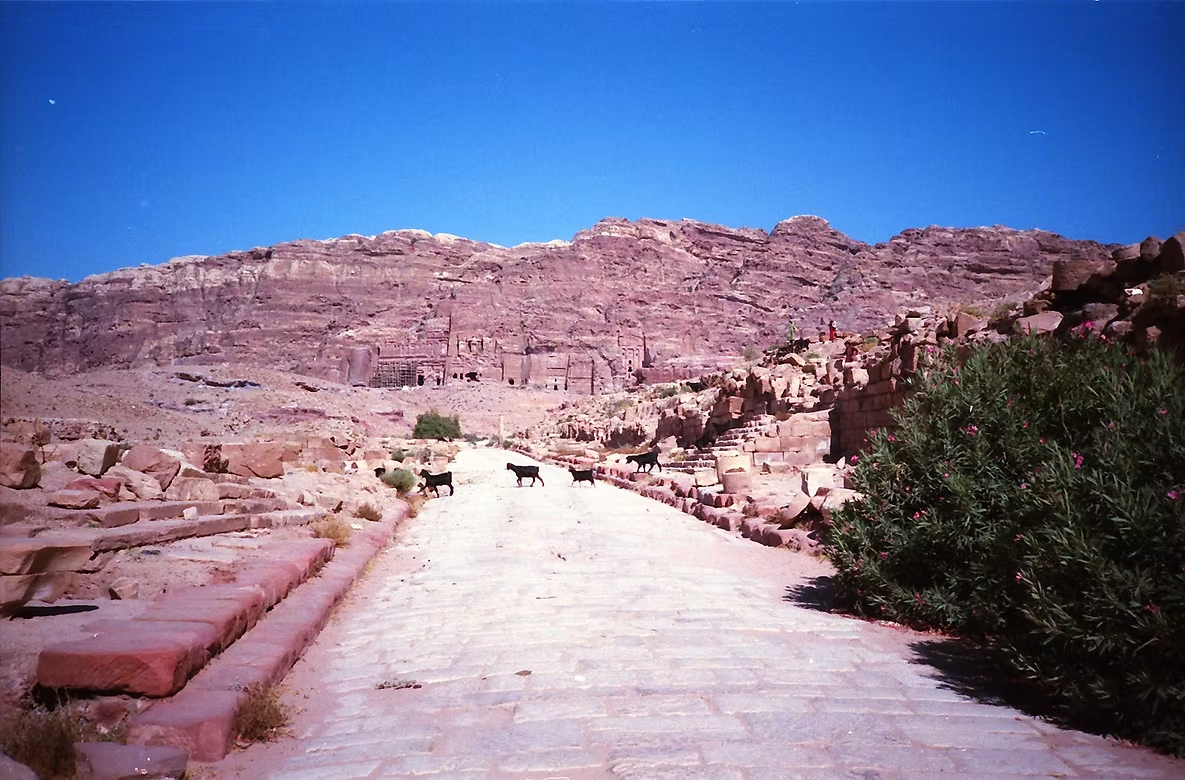
The Nabatean’s are thought to originate from one of the tribes that prospered from their control of the trade routes through the Arabian Peninsula. What is visible today at Petra is mostly their rock-cut tombs but the city flourished from the 3rd Century BC until it was annexed by the Romans in 106 AD. The Nabateans were able to establish a city in this semi-arid location by building supply systems to channel and store water.
The Roman city of Jerash is close to the border with Syria and is impressive despite only a small part of the site having been excavated. The Crusader fort at Kerak is just ruins but the scale of what remains is also impressive – it was one of the largest of the Crusader forts. Wadi Rum is the location of rock formations that have been used as the backdrop for many films ncluding Lawrence of Arabia. There are also a Nabatean temple and many inscriptions on the nearby rock faces.




Istanbul
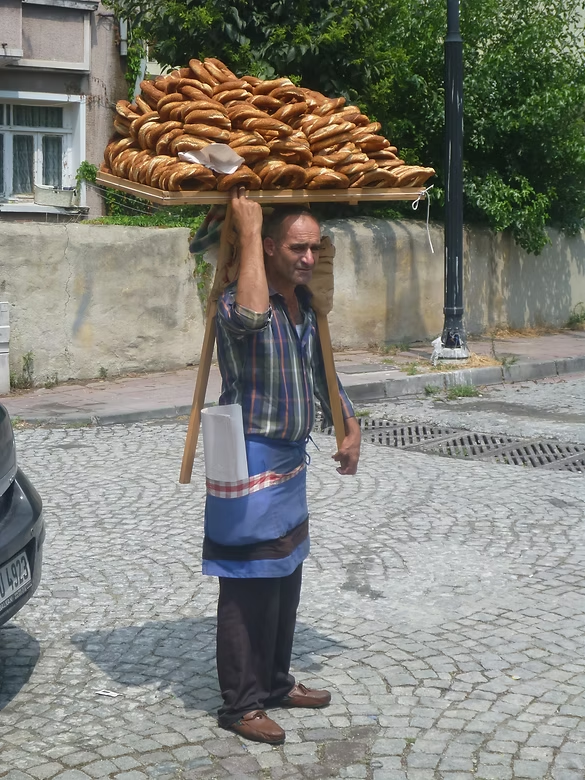
While there are amazing things to see elsewhere in Turkey, the city that was pre-eminent in the region for many millenia was Istanbul. While the site was settled much earlier, the city (then known as Byzantium) was first established around 660BC by the Greeks, before falling to the Romans (who renamed it Constantinople) and then the Arabs. Initially the capital of the Holy Roman Empire, it morphed into the Byzantine Empire before becoming the Ottoman Empire when it fell to the Arabs in 1453. It was re-named Istanbul in 1930 by Ataturk who was the founder of modern Turkey as a secular state.
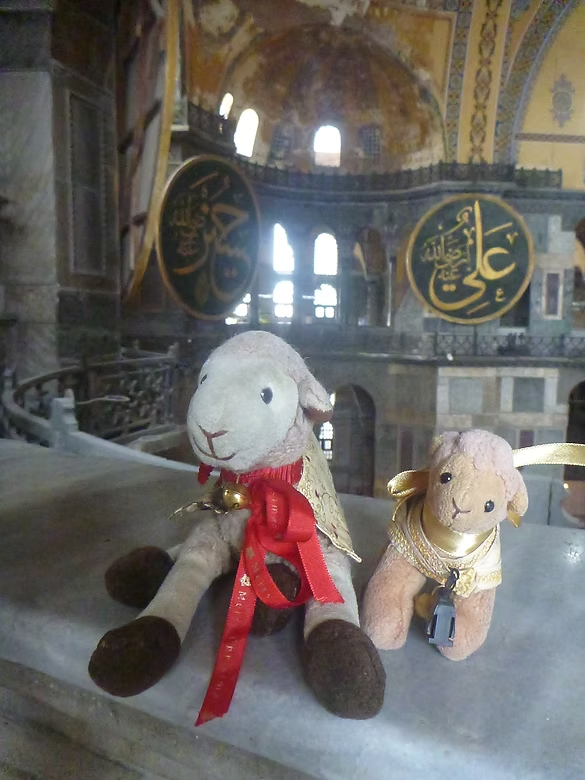
While there are many buildings in Istanbul that bear witness to this history, the one that most embodies it is the Hagia Sophia. Built by the Emperor Justinian in 537AD, it remained the largest cathedral in the world for more than a thousand years. After the Arab conquest in 1453, it became a mosque until 1935 when Ataturk turned it into a museum. Under the current Islamist leader Erdogan, it reverted to being a mosque in 2018.
While there are many other magnificent buildings in Instanbul (the Blue Mosque, Topkapi Palace, Suleymaniye Mosque, Grand Bazaar, Roman cisterns) nothing quite matches the Hagia Sophia for sheer scale and presence.