Davis & Enever of Essex, England

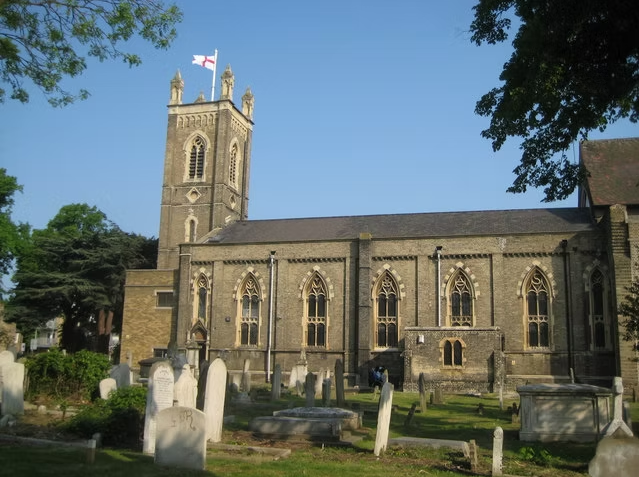


Frederick Davis (1839-1919) is one of the few of my ancestors of this generation that we know could read and write. Some extraordinary mementos have been handed down within the Davis family including a letter addressed to him dated 1854 from the Rev Henry William Bertie (1812-94) on the occasion of his “going into service” at the age of 15 Years. Rev Bertie was the vicar at Great Ilford but was son of an Earl and had educated at least two of the Davis boys and arranged for them to be employed as domestic servants in aristocratic families.
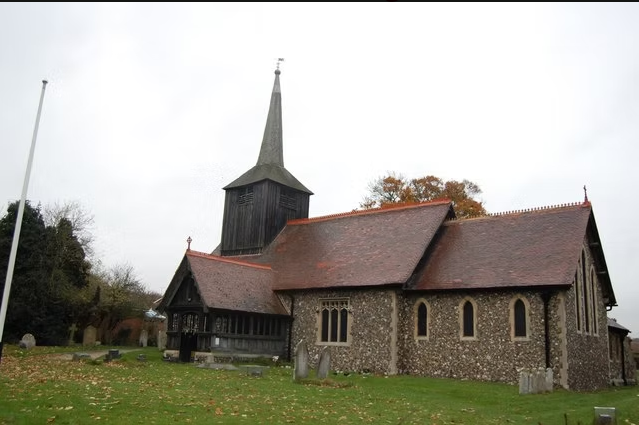
Frederick was the youngest of 8 children born to Samuel Davis (1793-1870) and his first wife Mary Anne (1802-42). Frederick’s family lived at that time in Great Ilford, Essex which at that time was semi-rural but is now a suburb of London. Samuel re-married in 1847 to Mary Ann Macro (1821-1915) and had a further three children. Samuel’s occupation was shown as “pork butcher” from 1825 to 1847 but, after 1851 he is employed as as a turnkey at Ilford jail and his truncheon, key and whistle have been handed down within the family. Samuel’s parents were another Samuel Davis (1758-1836) and Jane Enever (1760-1829) and their ancestors all lived in the villages of South Weald, Doddinghurst, Navestock and Ongar that are just to the north-west of Brentwood in Essex.
Frederick Davis married Catherine Barry (1835-98) in 1863 at the temporary church that occupied the site of the current Brompton Oratory in Kensington, London. Catherine was from Co Kerry in Ireland and it seems likely that they had met through being employed in the various homes in Gloucestershire and London of the Ponsonby family of Hatherop Castle.
Frederick and Catherine emigrated to Victoria in 1863 with Catherine’s mother Catherine Real (1794-1888). Since her father Richard Barry (1796-1856) was dead and her sister Ellen Barry (b1826) also moved to Victoria, this was probably the only viable option if she were not to abandon her widowed mother in London. As was common at that time, Frederick misrepresented his occupation as “labourer” and his mother-in-law’s age as 48 years (when she was in fact 69 years old). This was done to better fit the criteria for assisted passages.
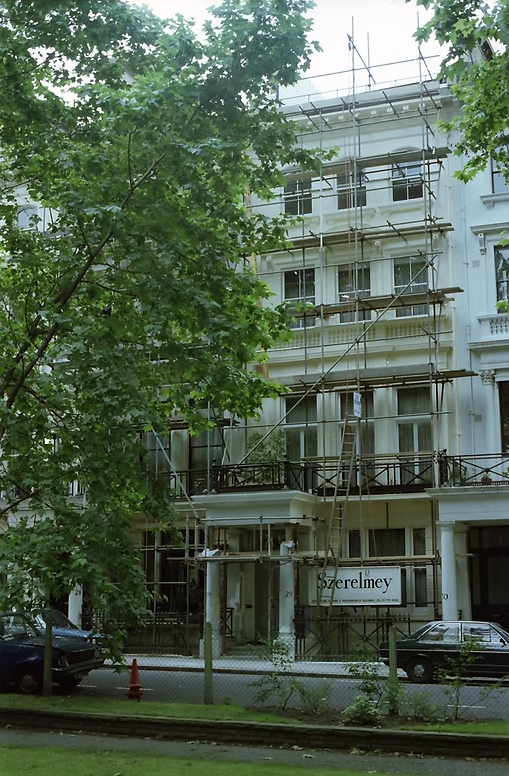
Frederick must have had some savings as he had bought two small houses in Cromwell St, Collingwood in 1866. He remained in Collingwood until after his retirement in 1900 when he moved to the new suburb of Oakleigh.
Frederick was employed immediately after his arrival as grocer, waiter and butler but was a “Civil servant” for most of his life from about 1869. He appears to have been employed in the Dining Room at Parliament House which would make sense given his background in service in England. Frederick appears to have converted to Catholicism when he married and became a senior officer in one of the Catholic Friendly Societies that operated in the late 19th Century to provide an early form of social security to their members.
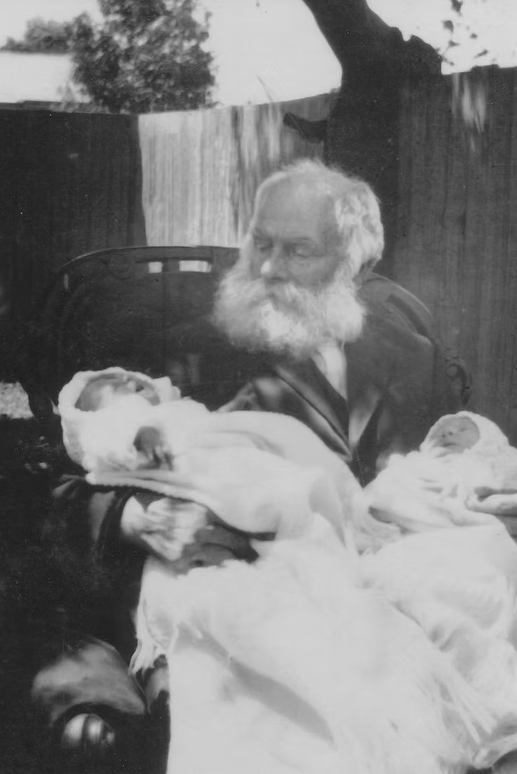
Frederick and Catherine had a total of 9 children and there are some wonderful photos of him in old age surrounded by his many grandchildren. They are both buried, with Catherine Real, in the Melbourne General Cemetery.