2006 Ferry Flight from USA to Australia
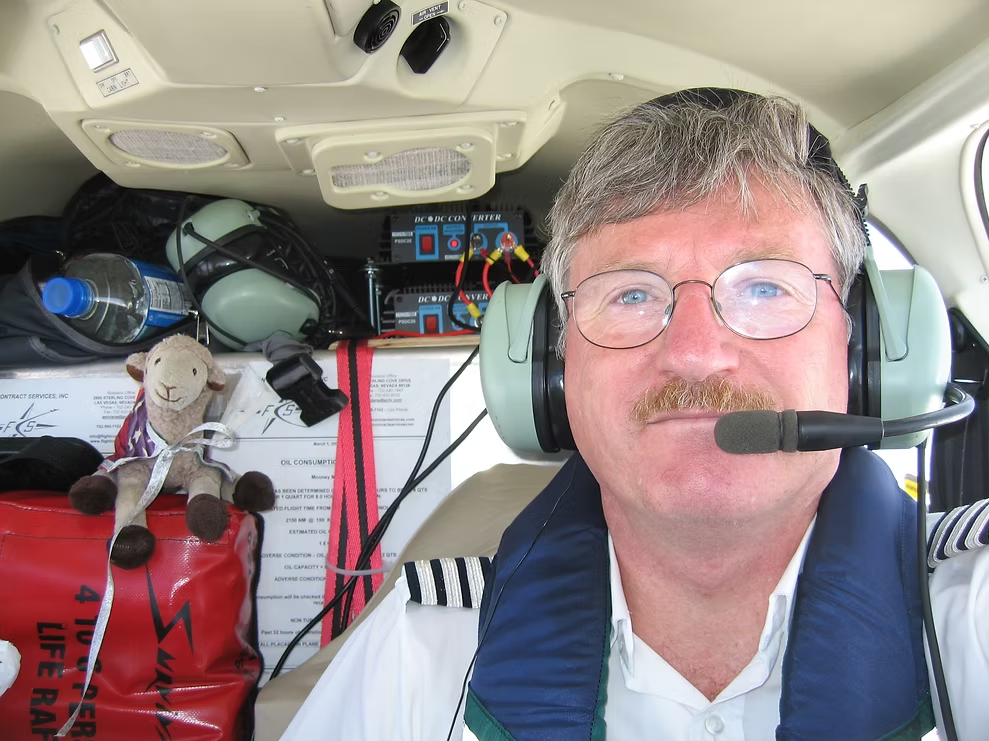

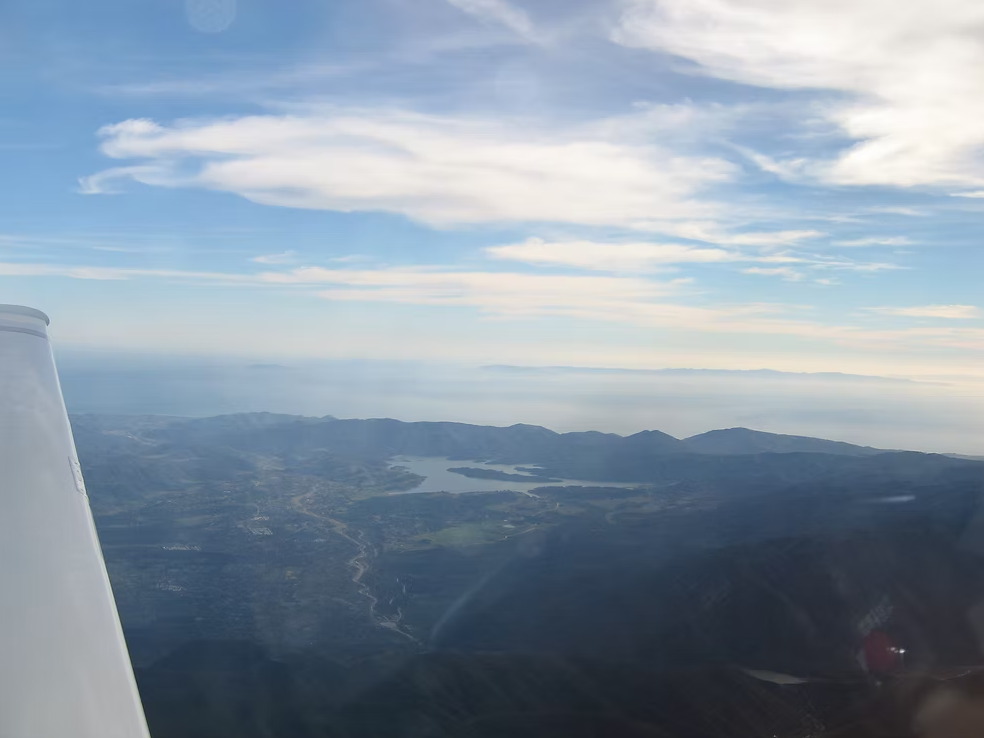
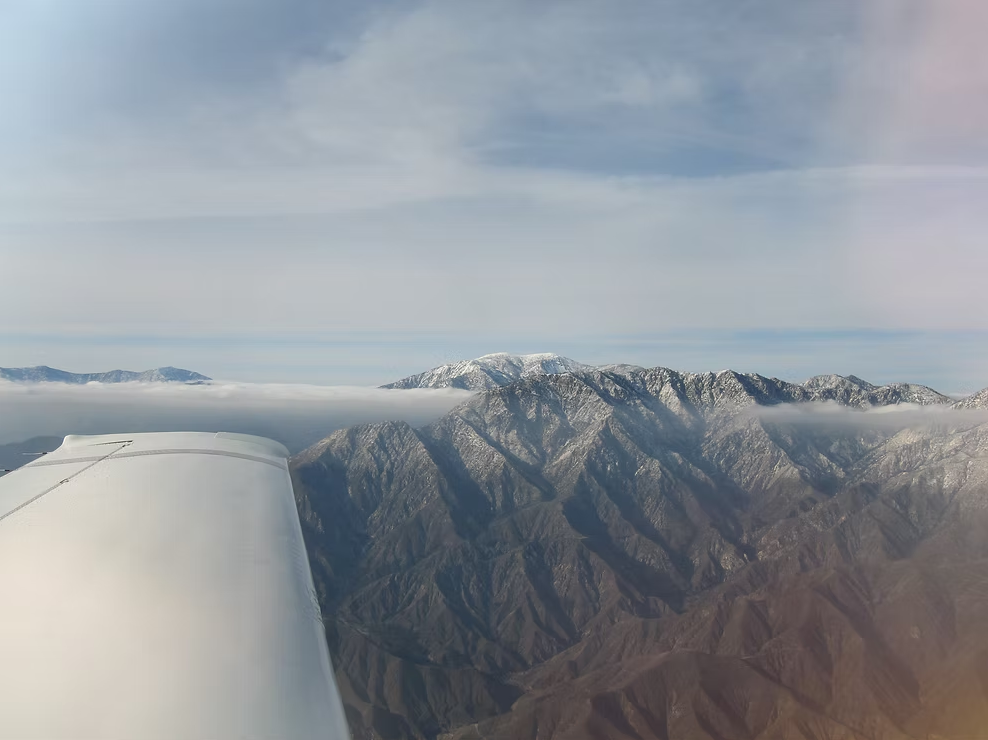
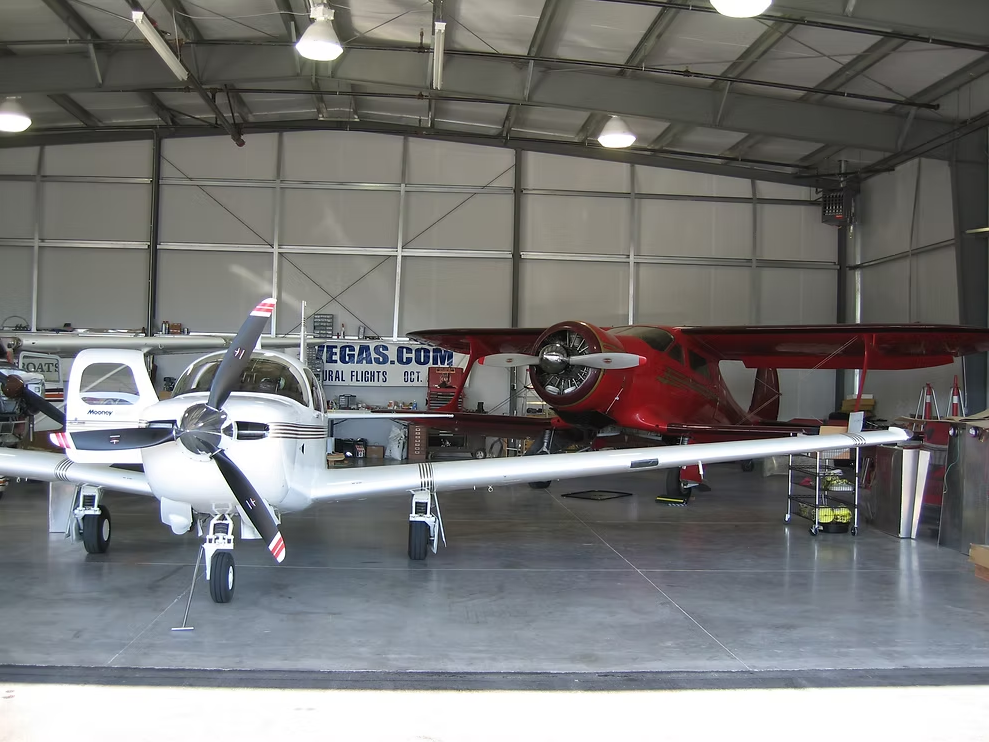




When I bought it, the aircraft was based near Seattle in the USA. I was due to finish my contract in Qatar a few months later so I decided to fly the aircraft to Australia myself. I engaged Bill Cox, an experienced ferry pilot, to advise me on how best to prepare the aircraft and the route to take. Bill arranged for the ferry tanks to be installed by Fred Sorenson who had fitted tanks to the many Mooneys that Bill had ferried to Australia in the past.
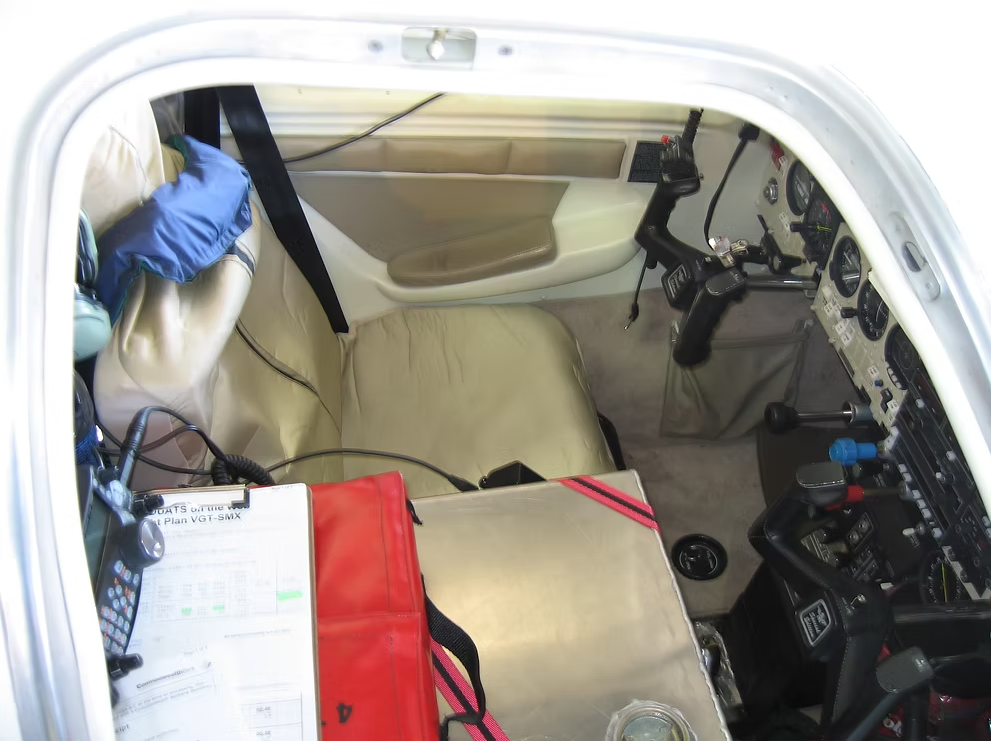
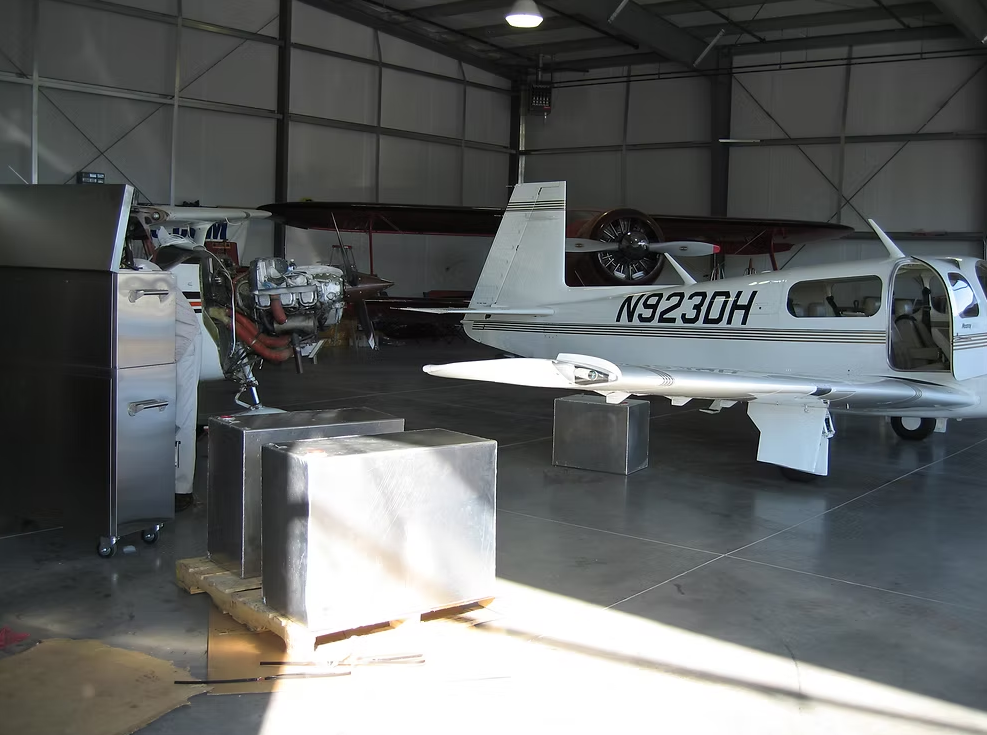
Bill then delivered the aircraft to North Las Vegas airport where I arrived in February 2006. Fred removed all but the one pilot seat and installed three metal tanks in their place that were plumbed into the fuel system. He also installed the HF radio that I’d use to communicate with ATC on the way across the Pacific.After two weeks of installation and familiarisation with the airplane, I flew to Santa Maria on the California coast intending just to overnight there before leaving the following day.
I was then delayed there for another two weeks dealing with what I thought was an issue with the HF radio and then some very wet and wintry weather. Eventually the weather improved enough and I set off for Kona in Hawaii at first light. The aircraft had capacity for 220 gallons of fuel (compared with the usual 64 gallons) so it had over 20 hours of fuel endurance or more then enough for the expected 14 hour flight time. The aircraft was very tail heavy and slow for the first few hours until the fuel had been exhausted from the aft tank. The time passed with a routine of engine checks, fuel calculations and 30 min reports to San Francisco Radio on the HF.
The latter often took some time waiting for a break in the reports from the many jet aircraft above on the busy air route to Hawaii. Like much of the rest of the trip there a lot of cloud and this involved frequent changes of level and small diversions to avoid the worst of the buildups. The weather on arrival at Kona was unseasonably bad with heavy showers so I was pleased to land there just after dark.After two nights organising my departure papers and have an oil change, I left early one morning for Kiritimati Atoll (or Christmas Island) which is part of Kiribati.
The weather was fine and, unlike the trip from California, the radio went completely quiet after the first half hour while I was VHF range. There was uncertainty about avgas at Kiritimati so I elected to fill the tanks again even thought it was only an 8 hour flight as I needed enough to go the next 8 hour leg to Pago Pago in American Samoa. Kiritimati Tower called me about an hour out to ask my ETA and then called an Air Pacific flight that was inbound about 10 minutes after me. After landing, the Air Pacific 737 unloaded four passengers and then left again without even stopping their engines. I found out later that we were the only two flights that week.
After tying the plane down and clearing Customs, I joined the four visitors in the truck that was to drive us to the Captain Cook Hotel which is the only place to stay on the island. The hotel looked like a rundown 1970s construction camp which indeed it had been but it had an idyllic beach with palm trees and turtles swimming just off the beach.
Two of the passengers on the 737 were fishermen who had come here to fish for “bonefish”. They were not happy with the standard of the hotel but had just discovered that they could not leave until the next flight in one week time. Kiritimati has the largest land area of any coral atoll in the world at 388 square km. The population of about 5,000 people are subsistence farmers or fisherman and a few earn money from the tiny number of tourists that visit. Dinner that night was fresh fish.Early the following morning the truck was there to drive me to the airport and, on the way, we picked up Mr Rubi who would open it up for me.
When I asked for the forecast he replied “we have no forecast” but then agreed that I could use the “Government phone” in the tower to call the National Weather Service in Hawaii. So I called and the briefer came back and gave the forecast for Kiritimati to Pago Pago (an 8 hour flight over about 2,300km) as “overcast with towering cumulus to 45,000”.
When I asked whether he could give me a lower level forecast he said that he could not as there were no aircraft operating in that area that could give them any data. It was a pretty bumpy flight all the way and I eventually decided that there was nothing gained by trying to go around or below these large clouds and it was better just to head straight through them.Pago Pago has a huge runway as it is a stopping point for US Air Force aircraft, but no Tower.
I refuelled beside a huge C-5 Galaxy transport that was on its way to Christchurch with supplies for an Antarctic base.The Samoan people are delightful but they do not appear to have gained much from being an US territory other than a couple of fish canneries. The roads are potholed and the infrastructure run down.After two nights there, it was time to head via Nadi (Fiji) to Port Vila the capital of Vanuatu. Port Vila was the first stop after Hawaii with a tower and it was nice to hear an Australian accent when I reported on that frequency. Airservices appear to second staff to Vanuatu to staff their air traffic control.
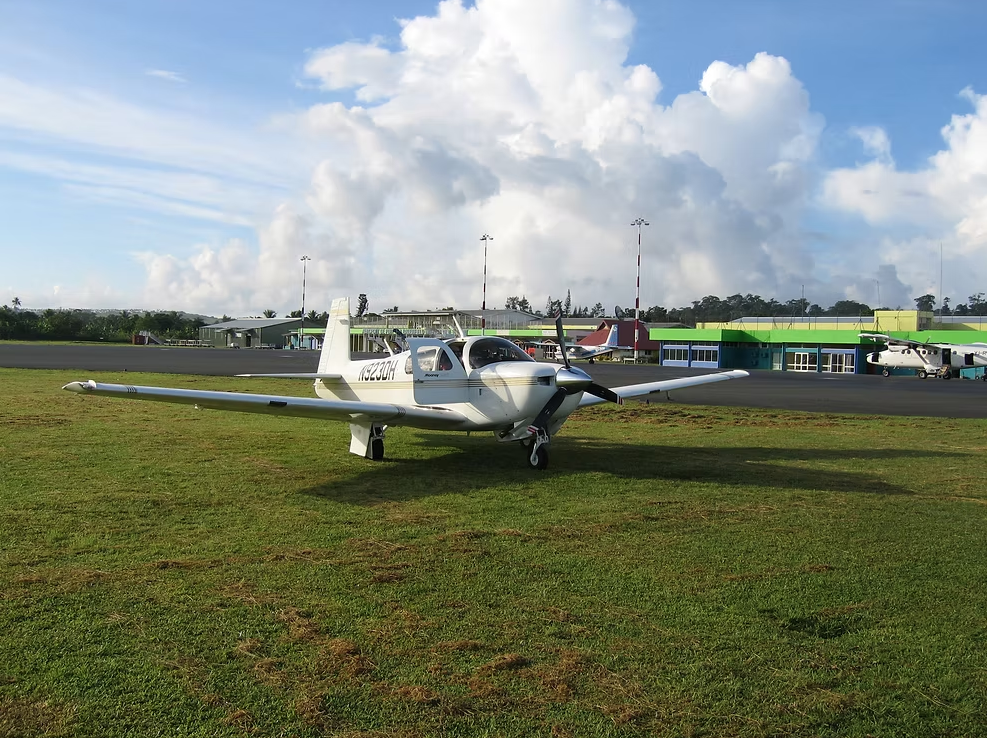
I parked the plane on the grass in front of the terminal and found that there was a band playing in the terminal to welcome an incoming Virgin flight. As operating crew, I needed only to show a document with the details of the aircraft and route to be waved through. By wearing a uniform, I was able to come and go through all of these airports without any further ado. Vanuatu shows signs of its French colonial heritage by having much better food than anything in the USA or its territories. After two nights in a nice hotel, it was time for the final 8 hour leg to Brisbane followed by what I thought would be just a final 4 hour leg to Mount Beauty.
After leaving Port Vila, I was making my position reports on HF to Brisbane radio. After another 8 hours flying, a smudge on the horizon became the Queensland coast and I was then being given landing instructions by Brisbane Tower. After landing, a guide car appeared and led me to a bay at the international terminal. I knew not to open the door but to shut down and wait for agriculture to arrive and hand a can of insect spray to me through the pilot window. I then sprayed the cabin before waiting a few minutes until they indicated I could open the door.
They then led me up through the terminal to the office of Australian Customs where there were three people waiting to interview me. Rather than the “welcome to Australia” that I’d expected, the opening comment from the senior guy was “Do you realise that you have broken the law”.
They said that the rules had changed a week ago such that incoming aircraft need to give 72 hours notice of arrival rather than the previous 24 hours.
The main company that arranges landing permits for private aircraft worldwide is based in Calgary, Canada. I had used them to arrange all my landing permits but it appears that they had not been aware of this change and had only notified Customs yesterday. Their next question was to ask for the importation documents for the aircraft.
I explained that I’d not lived in Australia in recent years, the aircraft was US registered and I might well take another contract and move it again to the next place that I was working. Eventually they said that I would need to post a bond for 12 months for the amount of the GST that I would then get back if the aircraft left the country within 12 months.
I agreed and asked whether they would take a cheque for the ca $30,000 of GST to which they said that the aircraft would need to be “entered” by an import agent. After initial reluctance, they pointed at the name of an import agent in the telephone directory who, when I called, said that it would take about two days to process the paperwork.This was very tedious since my family and friends had gathered in Mount Beauty that day to welcome me back. Since they had talked earlier about impounding my plane until the GST was paid, I then asked them whether they wanted me to leave it taking up a bay at the international terminal. They looked at each other and the senior guy told me to just park it in the GA area. When I asked the tower for a clearance, I was tempted to ask for a departure clearance for Mt Beauty but instead asked for a taxi clearance to the GA area.
I followed the lead car to a large area at the eastern end of the airport where there were a few GA aircraft parked. As the lead car was about to go, I jumped out and asked him how I was supposed to get out and he just gave me the code for the gate. For the next couple of days, I just came and went to the airplane as I liked – so much for high security.
After two days of chasing the paperwork through the Customs system, I finally had a receipt for the GST and was able to fly the last four hour leg to Mt Beauty where my family and friends had gathered again.
A few weeks after my return, I looked for the entry stamp in my passport as I needed it to renew my health insurance. I then realised that Customs had neglected to take me to Immigration so, while the plane had officially arrived, I had not.
It had been a 16,240km flight that took 54.4 hours flying time at an average speed of 298km/hr with an average fuel consumption of 13.5 liters/100km.
